
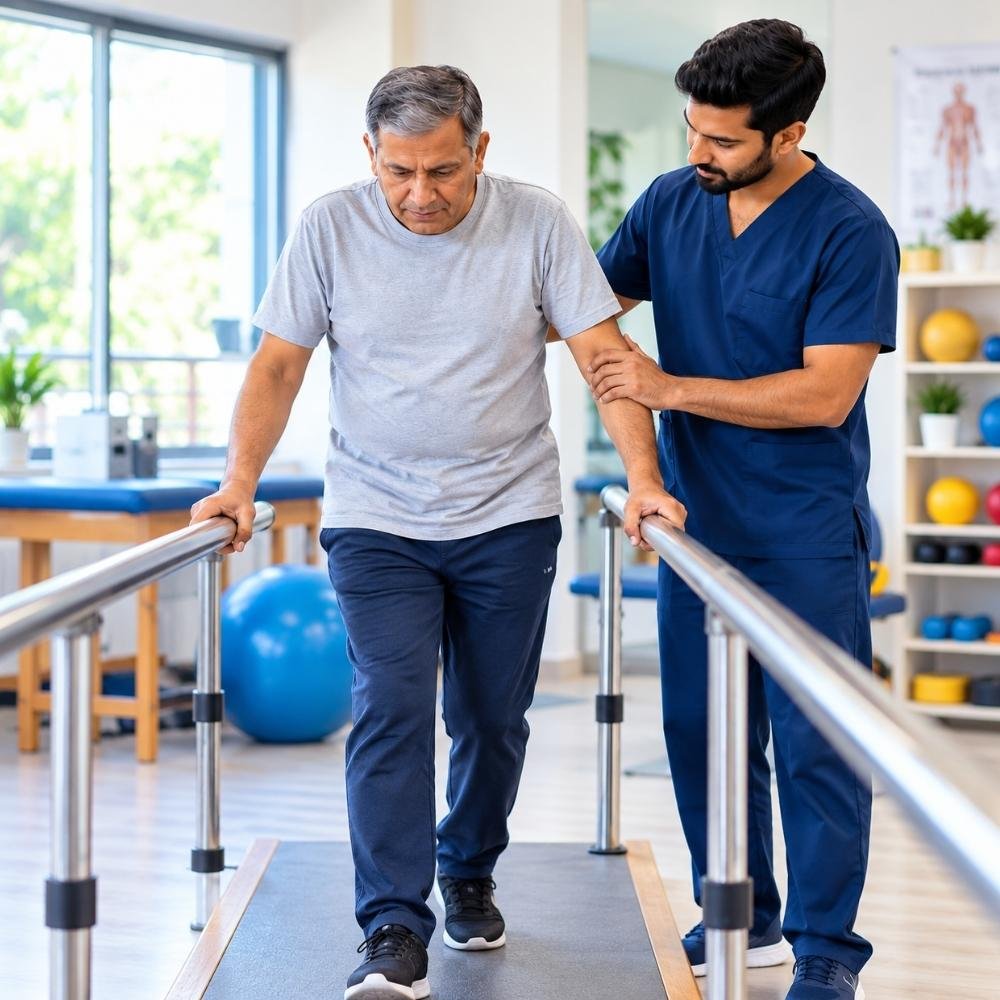
Stroke Rehabilitation in Kalyan
Stroke can affect movement, muscle strength, balance, coordination, walking ability, and independence in everyday activities. The effects and recovery needs can vary considerably from one person to another, making an individualized rehabilitation program important.
At ADP Physiotherapy, Stroke Rehabilitation in Kalyan focuses on helping patients work on mobility, strength, balance, coordination, and functional movement according to their individual abilities and rehabilitation goals.
Following an assessment, the physiotherapy program may include mobility exercises, strengthening, balance training, walking practice, movement-control exercises, and functional activity training. Rehabilitation is progressed gradually according to the patient’s condition, response, and medical guidance.
Stroke Rehabilitation in Kalyan Stroke Rehabilitation in Kalyan Stroke Rehabilitation in Kalyan Stroke Rehabilitation in Kalyan Stroke Rehabilitation in Kalyan Stroke Rehabilitation in Kalyan Stroke Rehabilitation in Kalyan
How Can a Stroke Affect Movement and Mobility?
A stroke may affect different physical abilities depending on the area and extent of neurological involvement.
Muscle Weakness – Weakness may affect an arm, leg, or one side of the body and make everyday movements more difficult.
Balance Difficulties – Changes in balance and body control can affect standing and walking.
Walking Difficulties – Some individuals may require rehabilitation to improve walking patterns, stability, and mobility.
Reduced Coordination – Controlled movements of the arms or legs may become more challenging.
Muscle Stiffness or Changes in Muscle Tone – Some stroke survivors may experience changes in muscle tone that influence movement.
Difficulty With Daily Activities – Standing up, transferring, walking, dressing, and other routine activities may require additional assistance or rehabilitation.
Goals of Physiotherapy After Stroke
The goals of Stroke Rehabilitation in Kalyan depend on the individual’s movement abilities, functional limitations, and stage of recovery. Physiotherapy focuses on helping patients work toward greater independence and safer participation in everyday activities.
Improve Mobility – Exercises and movement training may help patients work on bed mobility, sitting, standing, transfers, and other functional movements.
Improve Muscle Strength – Progressive exercises may be used to strengthen muscles affected by weakness.
Improve Balance and Stability – Balance training can help develop better control during sitting, standing, and walking activities.
Support Walking Ability – Gait training may focus on walking pattern, stability, weight shifting, and safe mobility according to individual ability.
Improve Coordination – Specific exercises may be used to work on controlled and coordinated movements of the arms and legs.
Support Functional Independence – Rehabilitation may include practicing movements required for everyday activities, helping patients work toward greater independence according to their abilities.
Stroke Rehabilitation Assessment
Before beginning rehabilitation, the physiotherapist may assess muscle strength, joint movement, balance, coordination, posture, walking ability, transfers, and functional mobility. The patient’s current level of assistance and ability to perform everyday activities may also be considered. Based on these findings, an individualized rehabilitation program can be planned and adjusted as progress occurs.
Physiotherapy Exercises for Stroke Rehabilitation
Exercises are an important part of Stroke Rehabilitation in Kalyan and are selected according to the patient’s movement ability, muscle strength, balance, and functional needs. The program is progressed gradually and may be modified as the patient’s abilities change.
Range-of-Motion Exercises – Gentle movements may help maintain joint mobility and support comfortable movement of the arms and legs.
Strengthening Exercises – Appropriate exercises may be used to improve strength in muscles affected by weakness.
Sitting and Standing Practice – Training may focus on maintaining posture, shifting body weight, and improving control while changing positions.
Balance Exercises – Activities may be introduced to improve stability and body control during sitting, standing, and functional movements.
Coordination Training – Repetitive and task-specific movements may be used to work on coordination and movement control.
Balance and Gait Training After Stroke
Stroke can affect balance, walking pattern, and confidence during mobility. Physiotherapy may include weight-shifting exercises, standing balance activities, stepping practice, and gait training according to the patient’s ability. When required, appropriate walking aids may be incorporated into rehabilitation following assessment. The goal is to support safer and more functional mobility while gradually increasing independence.
Functional Training for Daily Activities
An important part of Stroke Rehabilitation in Kalyan is helping patients practice movements that are useful in everyday life. Functional training is planned according to the patient’s current abilities and level of independence.
Bed Mobility – Practicing rolling, changing positions, and moving safely in and out of bed.
Sit-to-Stand Training – Repeated practice may help improve strength, balance, and control while standing up from a chair or bed.
Transfer Training – Patients may practice moving safely between the bed, chair, wheelchair, or other surfaces.
Walking Practice – Functional walking exercises may include turning, changing direction, and navigating suitable everyday environments.
Upper-Limb Activities – When appropriate, rehabilitation may include movements involving reaching, holding, and other functional arm activities.
Strength and Mobility Training After Stroke
Muscle weakness and reduced mobility can affect independence after a stroke. Physiotherapy may include progressive strengthening and mobility exercises according to the patient’s neurological and physical abilities. Exercises can focus on the legs, arms, trunk, and supporting muscles required for functional movement. The difficulty of activities is gradually adjusted according to progress and tolerance.
Upper Limb Rehabilitation After Stroke
A stroke may affect the strength, coordination, and movement control of the arm and hand. Physiotherapy may include exercises that encourage controlled shoulder, elbow, wrist, and hand movements according to the patient’s ability. Reaching, supported arm movements, and task-based activities may also be incorporated into rehabilitation. Exercises are selected carefully and progressed according to individual response and functional goals.
Home Exercise Program for Stroke Rehabilitation
A structured home exercise program can support Stroke Rehabilitation in Kalyan between physiotherapy sessions. Exercises may focus on mobility, strength, balance, coordination, and functional movements depending on the patient’s needs. Patients and caregivers are guided on appropriate exercises, correct technique, and safe assistance where required. The program should be followed according to the physiotherapist’s recommendations rather than progressed independently.
Role of Family and Caregivers in Stroke Rehabilitation
Family members and caregivers can play an important role in supporting rehabilitation at home. They may be guided on safe transfers, positioning, walking assistance, and helping the patient perform recommended exercises. Encouraging appropriate independence while providing necessary support can help patients participate more actively in everyday activities.
When Should Stroke Rehabilitation Begin?
Stroke rehabilitation may begin once the patient is medically stable and the treating medical team considers rehabilitation appropriate. The timing and intensity of physiotherapy depend on the type and severity of stroke, medical condition, movement ability, and individual tolerance. Rehabilitation is usually progressed gradually, with the program adjusted according to the patient’s response and functional progress.
How Long Does Stroke Rehabilitation Take?
There is no fixed recovery timeline after a stroke. The duration of Stroke Rehabilitation in Kalyan can vary depending on the severity of neurological involvement, muscle weakness, balance, mobility, overall health, rehabilitation goals, and individual progress. Some patients may require rehabilitation for a shorter period, while others may benefit from longer-term physiotherapy. Progress is reviewed regularly so that exercises and functional activities can be adjusted appropriately.
Why Choose ADP Physiotherapy for Stroke Rehabilitation?
Individual Assessment – Mobility, strength, balance, coordination, and functional abilities are assessed before planning rehabilitation.
Personalized Rehabilitation Plan – Exercises and activities are selected according to each patient’s abilities and goals.
Balance & Gait Training – Rehabilitation may include standing balance, walking practice, and functional mobility training.
Strength & Mobility Exercises – Progressive exercises focus on movements required for everyday activities.
Functional Rehabilitation – Patients practice activities such as transfers, standing, and walking according to their abilities.
Caregiver Guidance – Family members or caregivers may receive guidance for safely supporting exercises and functional activities at home.
Tips to Support Stroke Rehabilitation at Home
Along with physiotherapy sessions, regular practice of recommended activities at home can support the rehabilitation process.
Follow the Prescribed Exercise Program – Perform exercises according to the physiotherapist’s instructions and avoid increasing difficulty without guidance.
Encourage Safe Movement – Practice sitting, standing, transfers, or walking only with the level of assistance recommended by the rehabilitation team.
Maintain a Safe Home Environment – Keep walking areas clear and reduce avoidable obstacles that could increase the risk of falls.
Practice Functional Activities – Appropriate everyday movements can be incorporated into rehabilitation according to the patient’s abilities.
Allow Adequate Rest – Rehabilitation can be physically demanding, so activities should be balanced with appropriate rest
Frequently Asked Questions
Physiotherapy is commonly included in stroke rehabilitation to work on mobility, strength, balance, coordination, walking, and functional activities. The rehabilitation plan depends on the individual’s abilities and medical condition.
Walking recovery varies considerably between individuals. When appropriate, physiotherapy may include balance exercises, weight-shifting, stepping practice, gait training, and use of suitable walking aids.
The frequency of sessions depends on the patient’s medical condition, functional limitations, rehabilitation goals, tolerance, and recommendations from the rehabilitation team.
A physiotherapist may provide a home exercise and activity program where appropriate. Patients and caregivers should follow the recommended exercises and safety instructions.
Stroke Rehabilitation in Kalyan – ADP Physiotherapy
If a stroke has affected mobility, balance, strength, coordination, walking, or everyday activities, a structured physiotherapy program can form an important part of the rehabilitation process.
At ADP Physiotherapy, Stroke Rehabilitation in Kalyan is planned according to the patient’s current abilities, functional needs, medical guidance, and rehabilitation goals. The program may include mobility exercises, strengthening, balance and gait training, coordination exercises, and functional activity practice.
For an assessment and personalized stroke rehabilitation program, contact ADP Physiotherapy.
ADP Physiotherapy
📞 Contact: 9730631323
📍 Address: Shop No. 16, Ground Floor, Mata Parvati Apartment, Opposite Yogeshwar Tower, Katemanivali Naka, Kalyan East, Maharashtra – 421306