
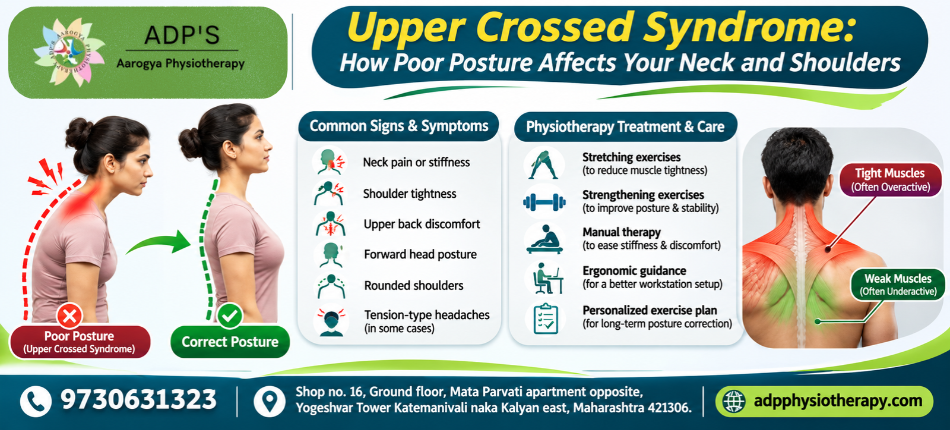
Upper Crossed Syndrome: How Poor Posture Affects Your Neck and Shoulders – ADP Physiotherapy
Neck pain, shoulder stiffness, and upper back discomfort have become common concerns among office workers, students, and people who spend long hours using computers or smartphones. Prolonged sitting, repetitive activities, and limited physical movement may contribute to muscle fatigue and changes in posture. One commonly described pattern associated with these problems is Upper Crossed Syndrome (UCS).
Upper Crossed Syndrome involves an imbalance in the muscles surrounding the neck, shoulders, chest, and upper back. It is often associated with forward head posture, rounded shoulders, and reduced upper-body mobility.
Understanding the causes, symptoms, and available Upper Crossed Syndrome Treatment options can help individuals manage discomfort and improve everyday movement.
At ADP Physiotherapy in Kalyan East, physiotherapy assessment and rehabilitation guidance can help individuals address posture-related neck and shoulder concerns through suitable exercises, movement training, and ergonomic education.
In this article, we explain what Upper Crossed Syndrome is, how poor posture affects the neck and shoulders, common symptoms, physiotherapy treatment approaches, and practical exercises for better upper-body mobility.
1. What Is Upper Crossed Syndrome?
Upper Crossed Syndrome is a term used to describe a pattern of muscle imbalance and postural changes affecting the neck, shoulders, chest, and upper back.
The condition is commonly associated with a forward head position, rounded shoulders, and increased curvature of the upper back.
In the traditional Upper Crossed Syndrome model, some muscles are described as relatively tight or overactive, while others may demonstrate reduced strength, endurance, or coordination.
Common Muscle Patterns in Upper Crossed Syndrome
Muscles that may become tight or overactive:
- Upper trapezius
- Levator scapulae
- Pectoralis major
- Pectoralis minor
- Certain muscles at the back of the neck
Muscles that may demonstrate weakness or reduced endurance:
- Deep neck flexors
- Middle trapezius
- Lower trapezius
- Serratus anterior
These muscle patterns may influence how the head, neck, and shoulders move during daily activities.
However, posture and muscle activation vary between individuals. Upper Crossed Syndrome is a descriptive clinical pattern rather than a diagnosis that explains every case of neck or shoulder pain.
2. How Does Poor Posture Affect Your Neck and Shoulders?
Poor posture habits, particularly maintaining the same position for extended periods, may contribute to neck and shoulder discomfort.
When a person frequently leans forward while working on a computer or looking at a smartphone, the neck and shoulder muscles may experience sustained loading.
Over time, this can contribute to muscle fatigue, stiffness, and reduced movement tolerance.
Forward Head Posture
Forward head posture occurs when the head is positioned farther forward relative to the shoulders.
This position may increase the muscular effort required to support the head, especially when maintained for long periods.
Some individuals experience neck stiffness, upper back fatigue, or discomfort during prolonged desk work.
Rounded Shoulders
Rounded shoulders occur when the shoulders rest in a relatively forward position.
This may be associated with reduced shoulder blade movement, chest muscle tightness, and changes in upper-back muscle activity.
Upper Back Stiffness
Prolonged sitting and limited movement can contribute to stiffness around the thoracic spine.
Reduced upper-back mobility may affect comfort during reaching, lifting, and overhead activities.
Shoulder Muscle Fatigue
Sustained computer work may increase fatigue in the muscles supporting the shoulders and shoulder blades.
A physiotherapist can evaluate whether muscle endurance, movement habits, workstation setup, or other factors are contributing to symptoms.
3. Common Causes of Upper Crossed Syndrome
Several lifestyle, occupational, and physical factors may contribute to the postural patterns associated with Upper Crossed Syndrome.
Prolonged Sitting
Sitting for extended periods without changing positions may contribute to muscle stiffness and reduced movement variety.
Excessive Smartphone Use
Frequently looking downward at a smartphone may increase sustained loading on the neck muscles.
Incorrect Workstation Setup
A monitor positioned too low, an unsuitable chair, or a keyboard placed too far away may encourage uncomfortable working positions.
Reduced Physical Activity
Limited exercise may affect the strength and endurance of muscles supporting the neck, shoulders, and upper back.
Repetitive Work Activities
Repeated tasks performed without adequate movement variation may contribute to localized muscle fatigue.
Muscle Weakness and Reduced Endurance
Reduced endurance in the deep neck flexors and shoulder blade muscles may contribute to difficulty maintaining comfortable positions during prolonged tasks.
Previous Injuries
Past neck or shoulder injuries may influence movement patterns and muscle function.
4. Common Symptoms of Upper Crossed Syndrome
Upper Crossed Syndrome is commonly associated with neck pain, shoulder stiffness, upper back discomfort, and changes in posture, such as forward head positioning and rounded shoulders. Individuals may experience muscle tightness around the neck and chest, reduced flexibility, and fatigue after prolonged sitting or computer work. Some people also notice difficulty maintaining comfortable sitting positions, restricted neck movement, or discomfort while performing overhead activities. In certain cases, tension-type headaches may occur alongside neck muscle discomfort, although headaches can have several different causes. These symptoms may develop gradually due to prolonged static positions, reduced physical activity, and changes in muscle strength or endurance. If symptoms persist or interfere with daily activities, a physiotherapy assessment can help identify contributing factors and determine whether Upper Crossed Syndrome Treatment or another approach is appropriate.
5. Who Is at Risk of Developing Upper Crossed Syndrome?
Certain activities and lifestyle patterns may increase exposure to sustained neck and shoulder loading.
Office Workers
People working long hours on computers may experience neck and shoulder fatigue due to prolonged sitting and repetitive movements.
Students
Students who spend extended periods studying or using digital devices may develop discomfort associated with sustained positions.
Smartphone Users
Frequent mobile phone use may encourage prolonged neck flexion.
Drivers
Long driving hours and limited opportunities to change position may contribute to upper-body stiffness.
People with Sedentary Lifestyles
Reduced physical activity can affect muscular endurance and general movement capacity.
Individuals Performing Repetitive Tasks
Some occupations require repeated arm movements or prolonged shoulder positioning, which may contribute to discomfort.
6. How Is Upper Crossed Syndrome Diagnosed?
Upper Crossed Syndrome is generally identified through a clinical assessment of posture, movement, muscle function, and symptoms. During the evaluation, a physiotherapist may observe head and shoulder positioning, assess neck and thoracic spine mobility, and examine the strength and endurance of muscles supporting the upper body. The assessment may also include shoulder blade movement, muscle flexibility, work-related activities, and ergonomic habits. Because similar symptoms can occur with cervical spine disorders, shoulder conditions, or other musculoskeletal problems, the physiotherapist considers alternative causes before recommending treatment. Imaging tests are not routinely required solely to identify the Upper Crossed Syndrome pattern, although they may be considered when other medical conditions are suspected.
7. Upper Crossed Syndrome Treatment: How Physiotherapy Helps
Upper Crossed Syndrome Treatment usually focuses on improving movement, muscular endurance, activity tolerance, and comfort during daily activities.
Physiotherapy treatment is individualized according to the patient’s symptoms, physical assessment, functional limitations, and personal goals.
A. Posture and Movement Assessment
A physiotherapist evaluates how the neck, shoulders, and upper back move during sitting, standing, reaching, and other activities.
The assessment helps identify movements or positions associated with discomfort.
B. Stretching Exercises
Stretching exercises are an important component of Upper Crossed Syndrome Treatment, particularly for individuals experiencing muscle tightness around the neck, shoulders, and chest. Prolonged sitting, repetitive computer work, and limited movement may contribute to reduced flexibility in muscles such as the upper trapezius, levator scapulae, and pectoral muscles. Gentle stretching exercises, including doorway chest stretches, upper trapezius stretches, and neck mobility movements, may help improve flexibility, reduce the sensation of stiffness, and support comfortable upper-body movement. These exercises should be performed slowly and within a pain-free or comfortable range without forcing the neck or shoulders into uncomfortable positions. A physiotherapist can recommend suitable stretching techniques based on individual muscle flexibility, symptoms, and physical condition to support posture-related rehabilitation.
C. Strengthening Exercises
Strengthening exercises play an essential role in physiotherapy management of Upper Crossed Syndrome by improving muscle endurance, shoulder stability, and movement control. Individuals with this postural pattern may demonstrate reduced strength or endurance in muscles such as the deep neck flexors, middle and lower trapezius, and serratus anterior, which contribute to neck support and shoulder blade movement. Exercises such as chin tucks, shoulder blade squeezes, resistance band rows, wall slides, and controlled scapular strengthening movements may help improve muscular coordination and upper-body function. A structured strengthening programme can also help individuals tolerate prolonged desk work and everyday activities more comfortably. At ADP Physiotherapy in Kalyan East, individualized physiotherapy guidance can help patients perform appropriate exercises with correct technique and gradual progression according to their symptoms, strength, and rehabilitation goals.
D. Thoracic Mobility Training
Upper-back mobility exercises may help improve movement during reaching, rotation, and overhead activities.
E. Manual Therapy
When appropriate, a physiotherapist may use manual therapy techniques to address stiffness or discomfort.
Manual therapy is generally considered alongside exercise and self-management education rather than as a replacement for active rehabilitation.
F. Ergonomic Guidance
Patients may receive recommendations about monitor positioning, chair support, keyboard placement, and regular movement breaks.
G. Home Exercise Programme
A personalized home exercise programme can help patients practise movements between physiotherapy sessions.
Consistency and gradual progression are important for improving exercise tolerance.
8. Best Physiotherapy Exercises for Upper Crossed Syndrome
Exercises may help improve postural alignment, muscle endurance, and movement control. However, the appropriate exercises depend on individual symptoms and assessment findings.
1. Chin Tucks
Chin tucks are commonly used to train deep neck flexor control.
How to perform:
- Sit or stand comfortably.
- Keep your eyes facing forward.
- Gently move your chin backward without tilting your head downward.
- Hold briefly.
- Return to the starting position.
A physiotherapist may recommend a suitable number of repetitions based on your condition.
2. Shoulder Blade Squeezes
This exercise focuses on controlled shoulder blade movement.
How to perform:
- Sit or stand upright.
- Relax your shoulders.
- Gently bring your shoulder blades toward each other.
- Hold briefly without shrugging.
- Slowly release.
Avoid excessive squeezing or forcing the shoulders backward.
3. Doorway Chest Stretch
This stretch targets the muscles at the front of the chest.
How to perform:
- Stand near a doorway.
- Place your forearms against the doorframe at a comfortable height.
- Gently move forward until you feel a mild stretch across your chest.
- Hold comfortably.
- Return slowly.
Stop if the exercise causes shoulder pain or tingling.
4. Upper Trapezius Stretch
This exercise may help relieve the sensation of tightness around the side of the neck.
How to perform:
- Sit comfortably.
- Keep both shoulders relaxed.
- Slowly tilt your head toward one shoulder.
- Hold a gentle stretch without pulling forcefully.
- Repeat on the other side.
5. Thoracic Extension Exercise
Thoracic extension exercises encourage movement through the upper back.
How to perform:
- Sit on a stable chair.
- Support your head gently with your hands if comfortable.
- Slowly extend your upper back over the chair’s backrest.
- Return to the starting position.
- Repeat gently.
6. Resistance Band Rows
Resistance band rows can help strengthen muscles involved in shoulder blade control.
How to perform:
- Secure a resistance band safely.
- Hold the band with both hands.
- Pull your elbows backward in a controlled movement.
- Keep your shoulders relaxed.
- Slowly return.
Exercise Safety: These are general educational examples, not a personalized prescription. Stop exercises that cause worsening pain, dizziness, numbness, or weakness, and seek professional assessment.
9. Ergonomic Tips to Prevent Neck and Shoulder Discomfort
Ergonomic adjustments may help reduce unnecessary strain during office work.
Keep Your Monitor at a Comfortable Height
Position the screen so you can view it without repeatedly bending your neck forward or looking upward.
Use a Supportive Chair
Choose a chair that supports comfortable sitting and allows your feet to rest on the floor or a footrest.
Position Your Keyboard and Mouse Properly
Keep frequently used devices close enough to avoid prolonged reaching.
Avoid Holding One Position for Too Long
There is no single perfect posture that must be maintained all day. Changing positions regularly is often more practical than trying to sit rigidly upright.
Take Regular Movement Breaks
Stand, walk, or gently move your neck and shoulders throughout the workday.
Maintain Regular Physical Activity
Walking, strengthening exercises, and other suitable activities can support general musculoskeletal health.
10. How Often Should You Take Posture Breaks?
People who spend long hours working at a desk should aim to change positions regularly throughout the day. Taking a brief movement break approximately every 30–60 minutes is a practical starting point for many office workers. During these breaks, standing, walking, gently moving the shoulders, or performing comfortable stretches may help reduce muscle fatigue and stiffness. Short, frequent breaks are often easier to maintain than occasional long breaks. The ideal frequency depends on individual comfort, work demands, and existing health conditions. Regular movement combined with ergonomic adjustments can help support neck and shoulder comfort during prolonged computer work.
11. Can Upper Crossed Syndrome Cause Neck Pain and Headaches?
Upper Crossed Syndrome may coexist with neck pain, shoulder discomfort, and certain types of headaches. Sustained neck muscle activity, reduced movement variety, and muscle sensitivity may contribute to discomfort in some individuals. However, headaches can arise from many different causes, including migraine, tension-type headache, and other medical conditions. It is therefore important not to assume that all headaches are caused by posture. A physiotherapist can assess musculoskeletal factors, while symptoms such as sudden severe headache, neurological changes, or unusual persistent headaches require appropriate medical evaluation.
12. How Long Does Upper Crossed Syndrome Treatment Take?
The duration of Upper Crossed Syndrome Treatment varies according to symptom severity, physical activity levels, muscle endurance, existing medical conditions, and consistency with rehabilitation exercises. Some individuals notice improvements in comfort or movement within a few weeks, while others require a longer period of rehabilitation. Physiotherapy programmes may include progressive strengthening, mobility exercises, ergonomic adjustments, and home exercise guidance. Rather than focusing only on visible posture changes, treatment progress should also be assessed through improvements in pain, movement, daily function, and activity tolerance. Regular reassessment helps the physiotherapist adjust the rehabilitation programme according to individual progress.
13. Can Upper Crossed Syndrome Be Prevented?
Although Upper Crossed Syndrome cannot always be prevented, maintaining healthy movement habits, regular physical activity, and appropriate workstation ergonomics may help reduce the risk of posture-related neck and shoulder discomfort. Individuals who spend long hours working on computers or using smartphones should avoid remaining in the same position for extended periods and take short movement breaks approximately every 30–60 minutes. Regular strengthening exercises for the neck, shoulder blade muscles, and upper back, combined with gentle stretching of tight chest and shoulder muscles, may support muscular endurance, flexibility, and comfortable movement. Adjusting monitor height, using a supportive chair, and keeping the keyboard and mouse within easy reach can also reduce unnecessary strain during desk work. There is no single perfect posture, so changing positions frequently is often more beneficial than maintaining a rigid sitting position. Seeking professional guidance from ADP Physiotherapy in Kalyan East can help individuals identify contributing factors and develop personalized exercise and ergonomic strategies for long-term musculoskeletal health.
14. When Should You Consult a Physiotherapist for Upper Crossed Syndrome?
You should consider consulting a physiotherapist if you experience persistent neck pain, shoulder stiffness, upper back discomfort, or difficulty performing everyday activities. Professional assessment may be particularly helpful when symptoms repeatedly occur during computer work, interfere with sleep, limit neck or shoulder movement, or do not improve with simple activity modifications. A physiotherapist can evaluate posture-related factors, muscle strength, movement patterns, and possible alternative causes of discomfort. Early guidance may help you understand your symptoms and develop a suitable exercise and rehabilitation plan. Seek urgent medical care for sudden or progressive limb weakness, significant neurological symptoms, or severe neck pain following an injury.
15. Upper Crossed Syndrome Treatment at ADP Physiotherapy in Kalyan East
For individuals experiencing neck stiffness, rounded shoulders, upper back discomfort, or posture-related movement difficulties, physiotherapy can provide a structured approach to assessment and rehabilitation.
At ADP Physiotherapy in Kalyan East, patients can seek guidance for musculoskeletal concerns through individualized physiotherapy assessment, suitable therapeutic exercises, posture education, and rehabilitation planning.
An appropriate treatment programme may focus on improving neck mobility, shoulder blade control, muscular endurance, and comfort during everyday activities.
Whether discomfort develops during office work, studying, smartphone use, or repetitive tasks, identifying contributing factors is an important step toward effective management.
Conclusion
Upper Crossed Syndrome is a commonly described pattern of muscle imbalance and postural changes that may be associated with neck stiffness, shoulder discomfort, rounded shoulders, and upper back fatigue.
Prolonged sitting, repetitive activities, reduced movement, and inadequate muscular endurance can contribute to discomfort in some individuals.
Appropriate Upper Crossed Syndrome Treatment may include physiotherapy exercises, strengthening, stretching, ergonomic guidance, and personalized rehabilitation.
At ADP Physiotherapy, individuals experiencing recurring neck and shoulder concerns can seek professional guidance to improve movement, manage discomfort, and support everyday physical function.
Contact ADP Physiotherapy
ADP Physiotherapy – Kalyan East
Address: Shop No. 16, Ground Floor, Mata Parvati Apartment, Opposite Yogeshwar Tower, Katemanivali Naka, Kalyan East, Maharashtra – 421306
Phone: +91 9730631323
Website: https://adpphysiotherapy.com/
Upper Crossed Syndrome Treatment Upper Crossed Syndrome Treatment Upper Crossed Syndrome Treatment Upper Crossed Syndrome Treatment Upper Crossed Syndrome Treatment Upper Crossed Syndrome Treatment Upper Crossed Syndrome Treatment Upper Crossed Syndrome Treatment Upper Crossed Syndrome Treatment Upper Crossed Syndrome Treatment Upper Crossed Syndrome Treatment Upper Crossed Syndrome Treatment Upper Crossed Syndrome Treatment Upper Crossed Syndrome Treatment Upper Crossed Syndrome Treatment Upper Crossed Syndrome Treatment Upper Crossed Syndrome Treatment Upper Crossed Syndrome Treatment Upper Crossed Syndrome Treatment Upper Crossed Syndrome Treatment Upper Crossed Syndrome Treatment