
Pediatric Physiotherapy
Helping children move better, build confidence and achieve their developmental milestones.
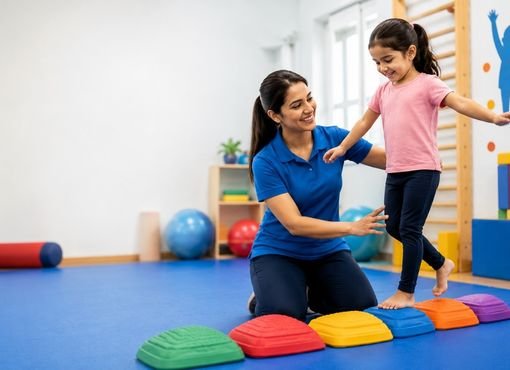
Pediatric Physiotherapy in Kalyan
Pediatric Physiotherapy in Kalyan focuses on helping children improve movement, strength, balance, coordination, mobility, and functional abilities according to their individual developmental and physical needs.
At ADP Physiotherapy , we provide child-focused physiotherapy programs based on an assessment of the child's movement abilities, developmental needs, strength, balance, coordination, and functional challenges.
The aim of pediatric physiotherapy is to support children in developing movement skills and participating more confidently in age-appropriate daily activities, play, school, and physical activities.
What Is Pediatric Physiotherapy?
Pediatric physiotherapy is a specialized area of physiotherapy that works with infants, children, and adolescents who may experience difficulties with movement, posture, strength, balance, coordination, mobility, or physical development.
Every child develops physical and movement skills at an individual pace. When movement limitations begin affecting everyday activities, play, mobility, or participation, a pediatric physiotherapy assessment can help identify areas where additional physical support may be useful.
Treatment is adapted according to the child's age, abilities, functional requirements, and individual goals. Physiotherapy activities can also be incorporated into age-appropriate games and movement-based tasks.
Who May Benefit From Pediatric Physiotherapy in Kalyan?
Pediatric Physiotherapy in Kalyan may be considered when a child experiences difficulties with movement, balance, coordination, strength, posture, walking, mobility, or participation in age-appropriate physical activities.
Developmental Movement Needs
Children who require additional support with age-appropriate movement abilities may benefit from a physiotherapy assessment and structured movement activities.
Walking Difficulties
Physiotherapy may assess walking patterns, lower-limb control, strength, balance, coordination, and functional mobility.
Balance Difficulties
Activities can be designed to develop balance reactions, body control, and confidence during standing, walking, and age-appropriate play.
Gross Motor Skills
Physiotherapy may support larger body movements such as standing, walking, running, jumping, climbing, and other physical activities.
Strength & Mobility
Age-appropriate activities may support muscle strength, stability, mobility, and functional movement according to the child's abilities.
Coordination Challenges
Movement activities may focus on body awareness, coordination, motor planning, and controlled movement during everyday tasks.
Areas Addressed Through Pediatric Physiotherapy
The physical and developmental needs of every child are different. A pediatric physiotherapy program is planned according to assessment findings, functional abilities, age, and individual goals.
- Gross motor skill development
- Balance and coordination
- Muscle strength
- Postural control
- Walking and mobility
- Movement planning
- Flexibility and joint mobility
- Functional movement skills
- Physical activity participation
- Age-appropriate movement tasks
Pediatric Physiotherapy Assessment in Kalyan
Before beginning a program for Pediatric Physiotherapy in Kalyan, the child's movement abilities and functional needs are assessed. Parents or caregivers may also be asked about developmental history, daily activities, physical abilities, and specific concerns.
Movement Assessment
The physiotherapist may observe how the child sits, stands, walks, changes position, and performs age-appropriate functional movements.
Strength & Mobility
Muscle strength, mobility, flexibility, posture, and physical abilities may be assessed according to the child's age and individual requirements.
Balance & Coordination
Balance, body control, coordination, and movement planning may be evaluated during standing, walking, play, and other functional activities.
Our Approach to Pediatric Physiotherapy in Kalyan
At ADP Physiotherapy, our approach to Pediatric Physiotherapy in Kalyan is based on the child's assessment, age, physical abilities, functional requirements, and individual rehabilitation goals.
Exercises and movement activities are selected to make physiotherapy age-appropriate and engaging while focusing on skills that can support participation in everyday activities.
Gross Motor Skill Training
Gross motor skills involve larger body movements such as sitting, standing, walking, running, jumping, and climbing. Physiotherapy activities may be used to practice these movements according to the child's abilities.
Balance & Coordination Training
Balance and coordination are important for walking, playing, changing direction, climbing, and participating in physical activities. Exercises can be progressively adapted according to the child's needs.
Strengthening Activities
Age-appropriate strengthening activities may be incorporated into movement and play to support muscle control, stability, and functional physical abilities.
Walking & Mobility Training
Where appropriate, physiotherapy may focus on walking patterns, balance, lower-limb control, mobility, and confidence during functional movement.
Posture & Body Control
Postural control supports the ability to maintain appropriate body positions during sitting, standing, walking, and play. Activities may focus on trunk control, stability, and body awareness.
Functional Movement Training
Functional training may involve movements required for school, play, stairs, outdoor activities, self-care, and other everyday situations relevant to the child's age and abilities.
Supporting Movement and Physical Development
Pediatric rehabilitation focuses on helping children use their physical abilities effectively during everyday activities. The areas addressed during therapy depend on the child's individual assessment and functional requirements.
Play-Based Pediatric Physiotherapy
Children often participate more comfortably when physical activities are engaging and suitable for their age. Selected rehabilitation activities may therefore be incorporated into games, movement challenges, and play-based tasks.
Play-based exercises can provide opportunities to practice balance, coordination, strength, reaching, stepping, walking, and other functional movements in a child-friendly setting.
The difficulty and type of activity can be adjusted gradually according to the child's abilities, response, and rehabilitation goals.
Pediatric Physiotherapy for Everyday Activities
The purpose of rehabilitation is not limited to exercises performed during physiotherapy sessions. Functional movement skills can support participation in everyday activities at home, school, and during play.
- Sitting and standing
- Walking safely
- Using stairs
- Running and jumping
- Outdoor play
- School activities
- Age-appropriate physical activities
- Changing body positions
Role of Parents in Pediatric Physiotherapy
Parents and caregivers are an important part of pediatric rehabilitation because children spend most of their time outside the physiotherapy clinic.
Where appropriate, parents may receive guidance about simple movement activities that can be practiced at home. These activities should be suitable for the child's abilities and follow the guidance provided by the physiotherapist.
Communication between parents and the physiotherapist can also help monitor functional changes and identify new rehabilitation goals as the child's physical abilities develop.
Benefits of Pediatric Physiotherapy in Kalyan
Depending on the child's individual needs, Pediatric Physiotherapy in Kalyan may support movement development, mobility, physical abilities, and participation in age-appropriate everyday activities.
Why Choose ADP Physiotherapy for Pediatric Rehabilitation?
At ADP Physiotherapy, pediatric rehabilitation is planned according to the child's individual movement abilities, physical needs, functional requirements, and physiotherapy assessment.
When Should You Consider Pediatric Physiotherapy?
A pediatric physiotherapy assessment may be considered when parents or healthcare professionals notice persistent difficulties with movement, walking, balance, coordination, strength, posture, mobility, or participation in age-appropriate physical activities.
Physiotherapy may also form part of a broader care or rehabilitation plan when recommended by a pediatrician or another healthcare professional. The appropriate approach depends on the child's individual needs and assessment findings.
For additional general information about child health and development, parents can refer to resources provided by the World Health Organization .
Frequently Asked Questions About Pediatric Physiotherapy
What is pediatric physiotherapy?
Pediatric physiotherapy is a specialized area of physiotherapy that supports infants, children, and adolescents with movement, mobility, balance, coordination, strength, posture, and functional physical activities.
At what age can a child receive pediatric physiotherapy?
Pediatric physiotherapy can be considered across different stages of childhood when an assessment identifies movement or functional needs. The approach is adapted according to the child's age, abilities, and individual requirements.
How does a pediatric physiotherapist assess a child?
Assessment may include observing movement, posture, walking, balance, coordination, strength, mobility, and age-appropriate functional activities. Parents may also be asked about developmental history and specific physical concerns.
Can pediatric physiotherapy help with balance and coordination?
When appropriate for the child's needs, physiotherapy activities can focus on balance, body control, coordination, motor planning, and functional movement.
Are pediatric exercises different from adult exercises?
Pediatric physiotherapy activities are adapted according to the child's age, physical abilities, functional needs, and attention level. Some exercises may also be incorporated into games and play-based activities.
Can parents practice physiotherapy activities at home?
Where appropriate, a physiotherapist may recommend simple activities for parents to practice with the child at home. These activities should follow the instructions provided as part of the child's individual physiotherapy program.
How many pediatric physiotherapy sessions are required?
There is no fixed number of sessions suitable for every child. Duration and frequency depend on assessment findings, functional needs, individual goals, progress, and the nature of the condition being addressed.
Book an Appointment for Pediatric Physiotherapy in Kalyan
If your child is experiencing difficulties with movement, balance, coordination, strength, walking, mobility, or age-appropriate physical activities, a pediatric physiotherapy assessment can help identify their individual functional needs. Contact ADP Physiotherapy to schedule an assessment and discuss an appropriate physiotherapy program for your child.
Book an Appointment