
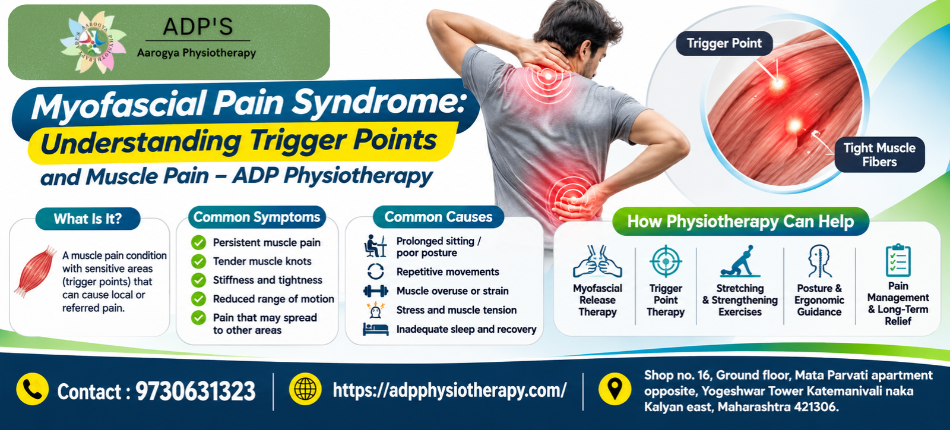
Myofascial Pain Syndrome: Understanding Trigger Points and Muscle Pain – ADP Physiotherapy
Introduction
Myofascial Pain Physiotherapy is a rehabilitation approach used to help manage persistent muscle pain, stiffness, tenderness, and movement difficulties associated with myofascial pain syndrome. Many individuals experience recurring discomfort in their neck, shoulders, back, or other muscle groups due to prolonged sitting, repetitive activities, physical strain, or other contributing factors.
Myofascial Pain Syndrome (MPS) is a musculoskeletal pain condition associated with sensitive areas within muscles, commonly referred to as trigger points. These areas may produce localized discomfort or referred pain, meaning pain felt in another part of the body.
For example, sensitive areas in certain neck and shoulder muscles may be associated with discomfort extending toward the head, upper back, or arm. However, similar symptoms can also arise from nerve, joint, or other medical conditions, making proper assessment important.
At ADP Physiotherapy in Kalyan East, patients can seek physiotherapy assessment and individualized rehabilitation guidance for muscle pain, stiffness, posture-related discomfort, and movement limitations.
This comprehensive guide explains the causes, symptoms, trigger points, diagnosis, physiotherapy treatment options, exercises, prevention strategies, and recovery considerations for myofascial pain syndrome.
What Is Myofascial Pain Syndrome?
Myofascial Pain Syndrome is a condition involving muscle pain and tenderness, often associated with sensitive areas known as myofascial trigger points.
The word myofascial refers to muscles (myo) and fascia, the connective tissue surrounding and supporting muscles and other structures.
People experiencing myofascial pain may notice:
-
Deep, aching muscle discomfort
-
Tender areas or knots within muscles
-
Pain during certain movements
-
Muscle stiffness or tightness
-
Reduced flexibility
-
Discomfort during prolonged activities
-
Pain that appears to spread to nearby areas
Symptoms may develop gradually or follow muscle overuse, repetitive activities, or physical strain.
Although trigger points are commonly discussed in clinical practice, there is ongoing scientific debate about their precise mechanisms and how reliably they can be identified by physical examination.
What Are Myofascial Trigger Points?
Myofascial trigger points are described as sensitive spots within muscle tissue that may cause pain when pressed or during movement.
Some clinicians describe two categories:
Active Trigger Points: Sensitive areas associated with spontaneous pain or discomfort during everyday activities.
Latent Trigger Points: Areas that are mainly painful when pressure is applied and may not cause ongoing spontaneous discomfort.
These classifications are used clinically, but trigger-point identification is not a definitive diagnostic test on its own.
Common Causes of Myofascial Pain Syndrome
Several factors may contribute to persistent muscle pain and sensitivity.
1. Poor Posture and Prolonged Sitting
Spending long hours sitting at a desk, using a laptop, or looking down at a smartphone can increase sustained loading on certain muscle groups.
Over time, limited movement and uncomfortable working positions may contribute to neck, shoulder, and upper-back discomfort.
2. Repetitive Muscle Movements
Repeated movements during work, sports, or household activities can place continuous demands on specific muscles.
When recovery time is insufficient, muscle soreness and sensitivity may develop.
3. Muscle Overuse and Physical Strain
Sudden increases in exercise intensity, heavy lifting, or unfamiliar physical activities may contribute to muscle pain.
Improper lifting techniques and inadequate conditioning can also increase the likelihood of musculoskeletal discomfort.
4. Physical Inactivity
Limited movement and prolonged sedentary behavior may contribute to reduced muscle endurance, stiffness, and discomfort.
Regular physical activity helps maintain muscle strength, flexibility, and movement capacity.
5. Stress and Muscle Tension
Psychological stress may influence muscle tension, sleep quality, and pain sensitivity.
Stress does not necessarily cause myofascial pain directly, but it can contribute to the persistence or intensity of symptoms.
6. Previous Muscle Injuries
Muscle strains and other injuries may be followed by persistent discomfort, particularly when normal movement and strength are not fully restored.
7. Inadequate Sleep and Recovery
Poor sleep can affect pain sensitivity and physical recovery.
Patients with persistent muscle pain may benefit from addressing sleep habits alongside their rehabilitation program.
Common Symptoms of Myofascial Pain Syndrome
Recognizing the symptoms can help patients understand when professional assessment may be useful.
1. Persistent Muscle Pain
A deep, aching sensation is a commonly reported symptom. Pain may remain localized or appear to extend into another region.
2. Tender Muscle Knots
Some patients notice sensitive or firm-feeling areas within muscles that become uncomfortable when pressure is applied.
3. Muscle Stiffness
Affected muscles may feel tight, especially after prolonged sitting, physical activity, or periods of inactivity.
4. Reduced Range of Motion
Pain and muscle guarding may make it difficult to turn the neck, lift an arm, bend forward, or perform certain movements comfortably.
5. Referred Pain
Pain associated with a sensitive muscle area may be perceived elsewhere. For example, neck muscle tenderness may accompany discomfort around the shoulder or head.
6. Discomfort During Daily Activities
Activities such as working at a computer, carrying bags, driving, or exercising may become uncomfortable.
7. Sleep Disturbances
Persistent muscle discomfort may interfere with sleep, particularly when lying in certain positions.
Important: Muscle pain accompanied by progressive weakness, persistent numbness, fever, significant unexplained weight loss, or other concerning symptoms requires medical evaluation rather than assuming the problem is caused by trigger points.
Common Areas Affected by Myofascial Pain
Myofascial pain can affect different muscle groups throughout the body. The location and intensity of symptoms vary depending on individual activities, physical condition, and contributing factors.
| Body Area | Common Symptoms |
|---|---|
| Neck | Stiffness, discomfort when turning the head |
| Shoulders | Upper trapezius tenderness, aching pain |
| Upper Back | Pain between the shoulder blades |
| Lower Back | Muscle tightness, discomfort during bending |
| Jaw | Facial muscle tenderness, discomfort while chewing |
| Hips | Muscle soreness, reduced movement comfort |
| Legs | Tenderness after repetitive activities or prolonged exertion |
Pain in these areas is not always caused by myofascial pain syndrome. A clinical assessment helps distinguish muscular discomfort from other conditions.
How Is Myofascial Pain Syndrome Diagnosed?
There is no single laboratory or imaging test that definitively confirms myofascial pain syndrome. Diagnosis is generally based on medical history, physical examination, and exclusion of other possible causes.
1. Detailed Medical History
The physiotherapist or healthcare professional asks about pain location, duration, intensity, daily activities, occupational demands, previous injuries, and factors that increase or reduce discomfort.
2. Physical Examination
The assessment may involve examining muscle tenderness, movement limitations, posture, muscle strength, and functional abilities. The clinician may gently palpate painful areas to evaluate sensitivity.
3. Range of Motion Assessment
Neck, shoulder, back, or limb movements may be assessed to identify restricted movement and activities that reproduce symptoms.
4. Muscle Strength and Functional Testing
Muscle strength, endurance, and movement control may be evaluated to understand how symptoms affect daily activities.
5. Screening for Other Conditions
Because similar symptoms may arise from nerve compression, joint disorders, inflammatory conditions, or other medical problems, additional evaluation may be recommended when necessary.
Research recognizes that standardized diagnostic criteria for myofascial pain syndrome remain an area of ongoing investigation.
How Myofascial Pain Physiotherapy Helps Manage Trigger Points
Myofascial Pain Physiotherapy focuses on reducing discomfort, improving mobility, restoring muscle function, and helping patients return to normal activities.
Treatment should be individualized based on symptoms, examination findings, functional limitations, and patient goals.
1. Myofascial Release Therapy
Myofascial release involves hands-on techniques that apply controlled pressure to sensitive muscles and surrounding soft tissues.
It may help reduce perceived tightness, improve movement comfort, and provide temporary symptom relief.
The technique is often used alongside exercise and rehabilitation rather than as a standalone cure.
2. Trigger Point Therapy
Trigger point therapy involves applying carefully controlled pressure or other techniques to tender muscle areas.
The aim is to reduce sensitivity and improve movement tolerance.
Treatment pressure should remain appropriate for the patient, and excessive force is not necessary.
3. Manual Therapy
Manual therapy includes hands-on techniques used to address selected movement restrictions and musculoskeletal discomfort.
Depending on the assessment, the physiotherapist may use soft-tissue techniques or joint mobilization.
These techniques may provide short-term relief and can support participation in an active rehabilitation program.
4. Stretching Exercises
Gentle stretching may help improve flexibility and reduce movement-related discomfort.
Exercises should target the relevant muscle groups and remain within a comfortable range.
Regular stretching may be particularly useful when muscle pain is associated with reduced range of motion.
5. Strengthening Exercises
Strengthening exercises help improve muscle capacity and tolerance for everyday activities.
For example, patients with recurring neck and shoulder discomfort may benefit from progressive strengthening of the upper back, shoulder, and neck muscles.
A systematic review of 24 randomized controlled trials found that exercise programs may improve pain intensity, pressure pain threshold, and range of motion in people with myofascial trigger-point-related problems.
6. Posture and Ergonomic Guidance
Physiotherapists may recommend adjustments to working positions, computer setups, and movement habits.
The objective is not to maintain one rigid posture throughout the day but to encourage comfortable positions, regular movement, and appropriate physical loading.
7. Dry Needling When Clinically Appropriate
Dry needling involves inserting thin sterile needles into selected muscle areas.
It may provide symptom relief for some patients, although results vary and the evidence for long-term benefits is less certain.
This technique should only be performed by appropriately trained professionals when clinically indicated and permitted by applicable practice rules.
8. Pain Education and Activity Modification
Understanding how pain responds to physical activity, stress, sleep, and movement can help patients manage symptoms.
A physiotherapist may recommend temporarily modifying aggravating activities while gradually rebuilding strength and activity tolerance.
Treatment approaches such as stretching, massage, physical therapy, and selected procedures are also discussed in guidance from the Mayo Clinic.
Benefits of Myofascial Pain Physiotherapy
1. Helps Reduce Muscle Pain
An individualized physiotherapy program may reduce muscular discomfort through exercise, appropriate hands-on treatment, and activity management. Treatment focuses on improving symptoms while addressing factors that may contribute to recurring pain.
2. Improves Flexibility and Mobility
Persistent pain can limit movement in the neck, shoulders, back, and other areas. Gentle stretching and progressive exercises may help restore comfortable movement and improve the ability to perform everyday tasks.
3. Supports Better Muscle Function
Muscle pain sometimes leads people to avoid movement, which may reduce strength and endurance over time. Physiotherapy encourages gradual strengthening and improved activity tolerance to support normal muscle function.
4. Helps Manage Recurring Discomfort
Physiotherapy can help patients recognize activities and habits associated with symptom flare-ups. By combining exercise, movement guidance, and self-management strategies, patients may become better equipped to manage recurring discomfort.
5. Encourages Long-Term Self-Management
A rehabilitation program can provide patients with practical strategies for managing symptoms outside the clinic. These may include appropriate home exercises, regular physical activity, sleep habits, and ways to modify aggravating activities.
Myofascial Pain Syndrome vs Fibromyalgia
Although both conditions involve persistent pain, they are not identical.
| Feature | Myofascial Pain Syndrome | Fibromyalgia |
|---|---|---|
| Pain distribution | Often regional or localized | Usually widespread |
| Muscle tenderness | May involve sensitive trigger-point areas | Often involves widespread tenderness |
| Common symptoms | Muscle aching, stiffness, restricted movement | Widespread pain, fatigue, sleep difficulties |
| Diagnosis | Clinical assessment and exclusion of other causes | Clinical criteria and assessment |
| Treatment | Exercise, rehabilitation, symptom management | Multidisciplinary care, exercise, pain management |
Both conditions can coexist, and their symptoms may overlap. A healthcare professional should evaluate persistent or widespread pain.
Physiotherapy Exercises for Myofascial Pain Syndrome
Exercise selection depends on the affected muscles, severity of symptoms, and individual medical history.
The following are general examples rather than a personalized treatment prescription.
1. Gentle Neck Range of Motion
Slowly turn your head from side to side within a comfortable range.
This movement may help maintain neck mobility and reduce stiffness associated with prolonged inactivity.
Avoid forcing the movement or continuing if it causes dizziness, radiating pain, or other concerning symptoms.
2. Shoulder Rolls
Gently roll the shoulders backward and forward.
This simple movement can encourage comfortable shoulder motion during long periods of desk work.
3. Shoulder Blade Squeezes
Sit or stand comfortably and gently draw the shoulder blades toward each other without excessively arching the back.
This exercise may help improve awareness and control of the muscles around the shoulder blades.
4. Gentle Upper Trapezius Stretch
With the shoulders relaxed, gently tilt the head toward one side until a mild stretch is felt along the opposite side of the neck.
Avoid pulling forcefully on the head or stretching into pain.
5. Walking and General Physical Activity
Regular walking and other comfortable aerobic activities can support general conditioning, movement confidence, and overall health.
Start with an activity level you can tolerate and increase gradually.
Safety note: Stop any exercise that causes worsening pain, numbness, dizziness, or weakness. Seek professional assessment before beginning a new exercise program if you have significant or unexplained symptoms.
How Long Does Myofascial Pain Physiotherapy Take to Work?
Recovery varies depending on the duration of symptoms, contributing factors, physical condition, and treatment response.
Some individuals experience improvement within a relatively short period, while others with persistent symptoms require a longer rehabilitation program.
Factors influencing recovery may include:
-
Duration and severity of muscle pain
-
Associated injuries or medical conditions
-
Physical activity and muscle conditioning
-
Sleep and stress
-
Consistency with rehabilitation exercises
-
Workplace and daily activity demands
There is no guaranteed number of sessions that works for every patient.
Progress is best assessed through changes in pain, mobility, daily function, and activity tolerance.
How to Prevent Recurring Myofascial Pain
Maintain Regular Physical Activity
Consistent exercise helps maintain muscle strength, endurance, and mobility. Choose activities suited to your physical condition and increase intensity gradually.
Take Movement Breaks
If you spend long periods sitting, change positions and take brief movement breaks throughout the day.
Improve Your Workstation Setup
Position your screen, keyboard, and chair to support comfortable working. Avoid remaining in positions that consistently aggravate symptoms.
Avoid Sudden Increases in Physical Load
Gradually increase exercise intensity, lifting demands, or repetitive activities to allow muscles time to adapt.
Prioritize Adequate Sleep
Consistent sleep habits may support recovery and help manage pain sensitivity.
Manage Stress
Relaxation techniques, breathing exercises, and enjoyable physical activities may help reduce stress-related muscle tension.
Seek Early Assessment for Persistent Pain
If muscle pain continues, worsens, or repeatedly interferes with daily activities, seek professional advice.
When Should You Consult a Physiotherapist?
Consider physiotherapy assessment if you experience:
-
Persistent neck, shoulder, or back muscle pain
-
Recurrent muscle tightness
-
Pain that interferes with work or sleep
-
Reduced flexibility or movement
-
Discomfort during routine physical activities
-
Recurring pain despite appropriate rest and activity modification
Seek urgent medical care for muscle pain associated with chest pain, breathing difficulty, sudden neurological symptoms, or severe symptoms following an injury.
Why Consider ADP Physiotherapy for Myofascial Pain Physiotherapy in Kalyan East?
At ADP Physiotherapy, patients can seek assessment and rehabilitation guidance for muscle pain, stiffness, posture-related discomfort, and movement limitations.
An individualized physiotherapy approach can help patients understand their symptoms and identify suitable strategies for improving movement and physical function.
Personalized Physiotherapy Assessment
A detailed assessment helps identify painful movements, functional limitations, and possible contributing factors before selecting treatment techniques.
Exercise-Based Rehabilitation
Appropriate stretching, strengthening, and movement exercises can support recovery and help patients improve their ability to perform daily activities.
Pain Management Guidance
Patients can receive advice on managing discomfort, adjusting activities, and recognizing when further medical assessment may be needed.
Long-Term Movement and Self-Care Education
Education about regular activity, ergonomics, exercise progression, and symptom management helps patients participate actively in their rehabilitation.
Conclusion
Myofascial Pain Syndrome can cause persistent muscle aching, tenderness, stiffness, and restricted movement that affect everyday activities.
Understanding trigger points, recognizing contributing factors, and seeking appropriate professional assessment can help patients make informed decisions about treatment.
Myofascial Pain Physiotherapy may support symptom management through a combination of individualized exercises, manual techniques, movement education, and progressive rehabilitation.
For individuals experiencing recurring muscle pain or movement limitations in Kalyan East, ADP Physiotherapy offers a point of contact for physiotherapy consultation and rehabilitation guidance.
Contact ADP Physiotherapy at 9730631323 to enquire about an appointment.
Myofascial Pain Physiotherapy Myofascial Pain Physiotherapy Myofascial Pain Physiotherapy Myofascial Pain Physiotherapy Myofascial Pain Physiotherapy Myofascial Pain Physiotherapy Myofascial Pain Physiotherapy Myofascial Pain Physiotherapy Myofascial Pain Physiotherapy Myofascial Pain Physiotherapy Myofascial Pain Physiotherapy Myofascial Pain Physiotherapy Myofascial Pain Physiotherapy Myofascial Pain Physiotherapy Myofascial Pain Physiotherapy Myofascial Pain Physiotherapy Myofascial Pain Physiotherapy Myofascial Pain Physiotherapy Myofascial Pain Physiotherapy Myofascial Pain Physiotherapy Myofascial Pain Physiotherapy Myofascial Pain Physiotherapy Myofascial Pain Physiotherapy Myofascial Pain Physiotherapy Myofascial Pain Physiotherapy Myofascial Pain Physiotherapy