
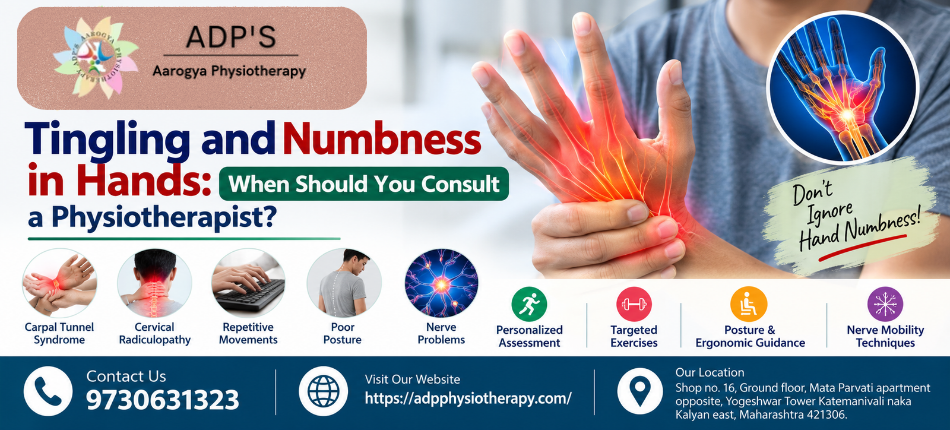
Tingling and Numbness in Hands: When Should You Consult a Physiotherapist? | Hand Numbness Physiotherapy – ADP Physiotherapy
Introduction
Have you ever experienced a pins-and-needles sensation in your hands after waking up, working on a computer, or holding your phone for a long time? While occasional tingling may occur due to temporary pressure on a nerve, frequent or persistent numbness can indicate an underlying problem that requires attention.
At ADP Physiotherapy in Kalyan East, we understand how tingling and numbness in the hands can affect everyday activities, work performance, and overall comfort. These symptoms may be associated with nerve compression, repetitive hand movements, poor posture, cervical spine problems, or certain medical conditions.
Hand Numbness Physiotherapy may help individuals experiencing symptoms related to certain musculoskeletal and nerve compression conditions. Through appropriate assessment, targeted exercises, nerve mobility techniques, and ergonomic guidance, physiotherapy can support improved movement and daily function.
In this detailed guide, we explain the common causes of tingling and numbness in hands, warning signs, available physiotherapy approaches, and when you should consult a physiotherapist for professional assessment.
2. What Is Tingling and Numbness in Hands?
Tingling and numbness are abnormal sensations that can occur when sensory nerve signals are affected.
Tingling, medically described as paresthesia, often feels like pins and needles, mild prickling, or an electric sensation.
Numbness refers to reduced or absent sensation in a particular area of the hand or fingers.
These symptoms may affect one hand, both hands, specific fingers, or the entire palm. Their location, duration, and associated symptoms can provide useful clues about the underlying cause.
Common Sensations Include:
-
Pins-and-needles feeling in the fingers
-
Reduced sensation in the palm or fingertips
-
Burning or electric-shock-like sensations
-
Hand weakness or reduced grip strength
-
Tingling during sleep or after waking up
-
Difficulty holding or handling small objects
-
Symptoms that extend from the neck or arm into the hand
Occasional symptoms caused by temporary positioning may resolve after changing posture. However, recurring or persistent symptoms should be evaluated by an appropriate healthcare professional.
3. What Are the Common Causes of Tingling and Numbness in Hands?
Understanding the underlying cause is essential because different conditions require different treatment approaches.
A. Carpal Tunnel Syndrome
Carpal tunnel syndrome occurs when the median nerve becomes compressed as it passes through a narrow passage in the wrist.
This condition commonly causes tingling, numbness, and discomfort in the thumb, index finger, middle finger, and part of the ring finger. Symptoms may become more noticeable during the night or while performing certain hand activities.
People who frequently perform repetitive or forceful wrist movements may experience symptoms, although repetitive activity is not the only contributing factor.
Physiotherapy may be part of conservative management in selected cases, alongside wrist splinting, activity modification, and medical guidance.
B. Cervical Radiculopathy (Pinched Nerve in the Neck)
Cervical radiculopathy develops when a nerve root in the neck becomes irritated or compressed.
The condition may cause pain, tingling, numbness, or weakness that travels from the neck into the shoulder, arm, or hand.
Common contributing factors include age-related changes in the cervical spine and herniated discs.
For appropriately selected patients, physiotherapy may include cervical mobility exercises, strengthening, posture guidance, and other rehabilitation techniques.
C. Ulnar Nerve Compression
The ulnar nerve provides sensation to the little finger and part of the ring finger.
Compression commonly occurs around the elbow, a condition known as cubital tunnel syndrome, although the nerve can also be compressed at the wrist.
Symptoms may include tingling in the little finger, reduced hand coordination, and difficulty gripping objects.
Treatment depends on the severity and cause of compression. Activity modification, positioning advice, and selected rehabilitation exercises may be recommended.
D. Repetitive Hand and Wrist Movements
Repeated hand movements, prolonged gripping, and sustained wrist positions may aggravate certain nerve compression or musculoskeletal conditions.
Activities such as typing, using handheld tools, or prolonged mobile phone use may contribute to discomfort in susceptible individuals.
However, repetitive activity does not automatically mean that a person has nerve damage.
Ergonomic changes, regular movement breaks, and targeted exercises may help reduce strain when these activities contribute to symptoms.
E. Poor Posture and Prolonged Sitting
Prolonged sitting and sustained neck or shoulder positions can contribute to muscle discomfort and may aggravate symptoms in people with certain cervical spine conditions.
Individuals who work at desks for extended periods may experience neck stiffness, shoulder tension, or arm discomfort.
Posture alone does not explain every case of hand numbness, so a proper assessment is important.
Physiotherapy may help address movement limitations, muscle weakness, and workstation-related factors.
F. Peripheral Neuropathy
Peripheral neuropathy occurs when nerves outside the brain and spinal cord become damaged or dysfunctional.
Possible causes include diabetes, vitamin B12 deficiency, certain medications, and other medical conditions.
Symptoms may include burning, tingling, numbness, or reduced sensation in the hands and feet.
Because treatment depends on the underlying medical cause, physiotherapy should not replace appropriate medical investigation. Rehabilitation may help with strength, coordination, and function in selected cases.
G. Vitamin Deficiencies and Other Medical Conditions
Certain nutritional deficiencies and systemic conditions can affect nerve function.
For example, vitamin B12 deficiency may cause tingling, numbness, and other neurological symptoms. Thyroid disorders and diabetes can also contribute to peripheral nerve problems.
These conditions require medical assessment and cause-specific treatment.
Physiotherapy may support rehabilitation when appropriate, but exercises alone cannot correct an underlying nutritional or metabolic disorder.
4. Common Symptoms Associated with Hand Numbness
The symptoms of hand numbness can vary depending on the affected nerve and underlying condition.
| Symptom | Possible explanation |
|---|---|
| Tingling in the thumb, index, and middle fingers | Possible median nerve involvement |
| Numbness in the little and ring fingers | Possible ulnar nerve involvement |
| Neck pain with tingling down the arm | Possible cervical nerve root irritation |
| Nighttime hand numbness | Can occur with carpal tunnel syndrome |
| Weak grip or difficulty holding objects | Possible muscle or nerve dysfunction |
| Burning sensation in both hands | May occur with peripheral neuropathy |
| Intermittent tingling after sustained positioning | Possible temporary nerve pressure |
These patterns are only general indicators and cannot establish a diagnosis.
5. When Should You Consult a Physiotherapist for Tingling and Numbness in Hands?
Not every episode of tingling requires physiotherapy. However, symptoms that recur, persist, or interfere with daily life deserve professional assessment.
A. Tingling or Numbness Occurs Frequently
If you experience pins-and-needles sensations repeatedly throughout the day or during the night, it may indicate ongoing nerve irritation or another underlying condition.
A physiotherapist can assess movement, posture, strength, and relevant functional limitations. If symptoms suggest a medical or neurological cause, referral for further evaluation may be necessary.
B. You Experience Discomfort While Typing or Working
Hand tingling during computer work, writing, or repetitive tasks may be associated with sustained positioning, nerve compression, or other musculoskeletal problems.
A physiotherapist may review your work activities and suggest suitable ergonomic adjustments, movement breaks, and exercises based on the assessment.
C. Hand Weakness or Reduced Grip Strength Affects Daily Activities
Difficulty holding a cup, opening containers, gripping objects, or performing precise finger movements may indicate a functional problem.
New or progressive weakness requires prompt medical evaluation, particularly when it occurs with numbness.
After the underlying cause has been assessed, physiotherapy may help restore strength and function where appropriate.
D. Symptoms Are Associated with Neck, Shoulder, or Wrist Pain
When hand numbness occurs alongside neck pain, shoulder discomfort, or wrist symptoms, a musculoskeletal or nerve compression condition may be contributing.
A physiotherapist can examine movement patterns and functional limitations and help determine whether rehabilitation is appropriate.
E. Numbness Interferes with Sleep
Waking up frequently because of tingling or numbness may affect sleep quality and everyday comfort.
Certain nerve compression conditions, including carpal tunnel syndrome, commonly produce nighttime symptoms.
Professional assessment can help determine whether positioning advice, splinting, rehabilitation, or medical treatment may be useful.
F. Symptoms Continue Despite Rest or Activity Changes
Temporary tingling caused by sustained pressure often improves after changing position.
However, if symptoms persist despite rest or changes in activity, further evaluation is important.
A physiotherapist may assist with assessment of musculoskeletal factors, but persistent unexplained numbness may require medical investigation.
Important: Sudden numbness, especially with facial drooping, speech difficulty, severe headache, loss of balance, or weakness, requires emergency medical attention. Do not wait for a physiotherapy appointment.
6. How Can Hand Numbness Physiotherapy Help?
Hand Numbness Physiotherapy focuses on improving function and addressing suitable musculoskeletal contributors to symptoms.
The treatment plan depends on the underlying diagnosis, symptom severity, and individual needs.
A. Detailed Physiotherapy Assessment
A physiotherapist may assess cervical spine movement, wrist mobility, hand strength, sensation, posture, and activities that trigger symptoms.
This assessment can help identify functional limitations and determine whether physiotherapy is appropriate.
Further medical evaluation or nerve testing may be needed when the diagnosis is uncertain.
B. Nerve Mobility Exercises
Nerve mobility exercises, sometimes called nerve gliding or nerve flossing, involve controlled movements intended to help nerves move relative to surrounding tissues.
These exercises may be used in selected nerve compression conditions, although benefits vary and evidence differs by condition.
Exercises should be prescribed appropriately because aggressive stretching can aggravate symptoms.
C. Posture Correction and Ergonomic Guidance
For individuals whose symptoms are aggravated by sustained work positions, physiotherapy may include advice on workstation setup, arm positioning, and regular movement breaks.
The aim is to reduce unnecessary strain and improve comfort during daily activities.
D. Strengthening and Mobility Exercises
Targeted exercises may help improve wrist, hand, shoulder, and neck function depending on the underlying problem.
A physiotherapist can gradually adjust exercise intensity according to symptoms, strength, and functional progress.
E. Pain Management and Rehabilitation
Physiotherapy may include education, activity modification, therapeutic exercise, and other appropriate interventions to help manage discomfort.
The goal is to improve movement and everyday function rather than simply provide temporary symptom relief.
7. Physiotherapy Exercises for Tingling and Numbness in Hands
Exercises should be selected according to the diagnosis. Not every exercise is appropriate for every type of numbness.
A. Gentle Wrist Range-of-Motion Exercises
Slow wrist movements through a comfortable range may help maintain flexibility and reduce stiffness.
Avoid forcing movements that increase tingling or pain.
B. Finger Opening and Closing
Gently opening and closing the fingers can help maintain hand mobility during periods of reduced activity.
These movements are generally simple but should not replace evaluation of persistent sensory symptoms.
C. Shoulder Blade Retraction
Gentle shoulder blade exercises may help improve upper-back muscle control and support comfortable desk-work positioning.
They may be included when neck or shoulder dysfunction contributes to symptoms.
D. Cervical Mobility Exercises
Gentle neck movements may be recommended for selected individuals with neck-related symptoms.
However, exercises should be tailored to the condition, especially if arm pain, weakness, or numbness is present.
E. Median or Ulnar Nerve Gliding
Specific nerve gliding exercises may be considered for certain nerve compression conditions.
Because incorrect technique can worsen symptoms, these exercises are best learned under professional guidance.
Safety Tip: Stop any exercise that causes increasing numbness, shooting pain, or weakness, and seek professional advice.
8. Hand Numbness Physiotherapy for Carpal Tunnel Syndrome
Carpal tunnel syndrome is one of the recognized causes of hand tingling and numbness.
Management depends on symptom severity and whether there is evidence of nerve dysfunction.
Conservative treatment may involve wrist splinting, modifying aggravating activities, and selected rehabilitation strategies.
Physiotherapy may help address wrist mobility, activity-related discomfort, and functional limitations. However, severe symptoms, muscle wasting, or progressive weakness may require specialist evaluation and possibly surgical treatment.
Early assessment is important because prolonged significant nerve compression can lead to lasting functional problems.
9. Physiotherapy for Hand Numbness Caused by Cervical Spine Problems
Some individuals experience tingling in the hands because of irritation or compression of nerve roots in the neck.
These symptoms may occur alongside neck pain, arm pain, reduced mobility, or weakness.
Depending on the diagnosis, physiotherapy may include cervical mobility exercises, strengthening, education, and graded return to activity.
Treatment should be individualized, and symptoms such as progressive weakness, walking difficulties, or loss of coordination require prompt medical evaluation.
10. Daily Habits That May Help Reduce Hand Tingling
Simple adjustments may help reduce discomfort when symptoms are related to positioning or activity.
Maintain Comfortable Work Positions: Keep your keyboard, mouse, and chair arranged to avoid sustained awkward wrist or neck positions.
Take Regular Movement Breaks: Change position periodically during prolonged desk work.
Avoid Prolonged Pressure on the Elbows: Resting your elbows on hard surfaces for long periods may aggravate ulnar nerve symptoms.
Limit Sustained Wrist Bending: Keeping the wrist bent for extended periods may worsen symptoms in some people with carpal tunnel syndrome.
Stay Physically Active: Regular physical activity supports general musculoskeletal health and function.
Manage Underlying Medical Conditions: If you have diabetes, thyroid disease, or a diagnosed nutritional deficiency, follow your healthcare professional’s treatment recommendations.
11. Can Hand Numbness Be Prevented?
Not every cause of hand numbness can be prevented, particularly when symptoms arise from medical conditions or age-related changes.
However, some practical habits may help reduce avoidable strain and support hand and upper-limb health.
Maintaining comfortable work positions, varying repetitive tasks, taking movement breaks, and addressing symptoms early may be beneficial.
People with known medical risk factors should also follow recommended medical care.
Prevention strategies should be based on individual needs rather than assuming all numbness is caused by posture or repetitive activity.
12. How Long Does Hand Numbness Physiotherapy Take to Show Results?
The recovery time for Hand Numbness Physiotherapy varies depending on the underlying cause, severity of nerve compression, duration of symptoms, and individual health conditions. People experiencing mild tingling or numbness due to temporary nerve irritation or certain musculoskeletal problems may notice improvement within a few weeks of appropriate physiotherapy. However, conditions such as carpal tunnel syndrome, cervical radiculopathy, or prolonged nerve compression may require several weeks to months of rehabilitation. Physiotherapy may include targeted strengthening exercises, nerve mobility techniques, posture correction, and ergonomic guidance to improve movement and daily function. Following the recommended exercise program, making necessary lifestyle adjustments, and attending scheduled physiotherapy sessions may support recovery. It is important to understand that results differ for every individual, and severe or progressive nerve problems may require additional medical treatment. At ADP Physiotherapy in Kalyan East, rehabilitation plans can be tailored to individual symptoms and functional needs, with the aim of supporting safe and gradual improvement.
13. Why Choose ADP Physiotherapy in Kalyan East?
At ADP Physiotherapy, the focus is on understanding each individual’s movement-related concerns and developing an appropriate rehabilitation approach.
For people experiencing hand tingling or numbness associated with suitable musculoskeletal conditions, physiotherapy assessment can help identify functional limitations and guide rehabilitation.
A personalized plan may include therapeutic exercises, posture and ergonomic advice, nerve mobility techniques when indicated, and guidance for daily activities.
When symptoms suggest a medical condition beyond the scope of physiotherapy, further medical evaluation is important.
If you are looking for Hand Numbness Physiotherapy in Kalyan East, contact ADP Physiotherapy to discuss an assessment.
Conclusion
Tingling and numbness in the hands may appear minor initially, but persistent or recurring symptoms should not be ignored.
Conditions such as carpal tunnel syndrome, cervical radiculopathy, ulnar nerve compression, and peripheral neuropathy can produce similar sensations, making accurate assessment important.
Hand Numbness Physiotherapy may support recovery and improve function in selected musculoskeletal and nerve compression conditions through individualized exercises, ergonomic guidance, and rehabilitation.
However, physiotherapy is not suitable for every cause of numbness, and some symptoms require medical investigation or urgent treatment.
If hand tingling, numbness, or related discomfort is affecting your everyday activities, seeking timely professional advice can help you understand the cause and explore appropriate treatment options.
Consult ADP Physiotherapy for Hand Numbness Assessment in Kalyan East
ADP Physiotherapy
9730631323
Shop No. 16, Ground Floor, Mata Parvati Apartment, Opposite Yogeshwar Tower, Katemanivali Naka, Kalyan East, Maharashtra – 421306.
Hand Numbness Physiotherapy Hand Numbness Physiotherapy Hand Numbness Physiotherapy Hand Numbness Physiotherapy Hand Numbness Physiotherapy Hand Numbness Physiotherapy Hand Numbness Physiotherapy Hand Numbness Physiotherapy Hand Numbness Physiotherapy Hand Numbness Physiotherapy Hand Numbness Physiotherapy Hand Numbness Physiotherapy Hand Numbness Physiotherapy Hand Numbness Physiotherapy Hand Numbness Physiotherapy Hand Numbness Physiotherapy Hand Numbness Physiotherapy Hand Numbness Physiotherapy Hand Numbness Physiotherapy Hand Numbness Physiotherapy Hand Numbness Physiotherapy Hand Numbness Physiotherapy Hand Numbness Physiotherapy Hand Numbness Physiotherapy Hand Numbness Physiotherapy