
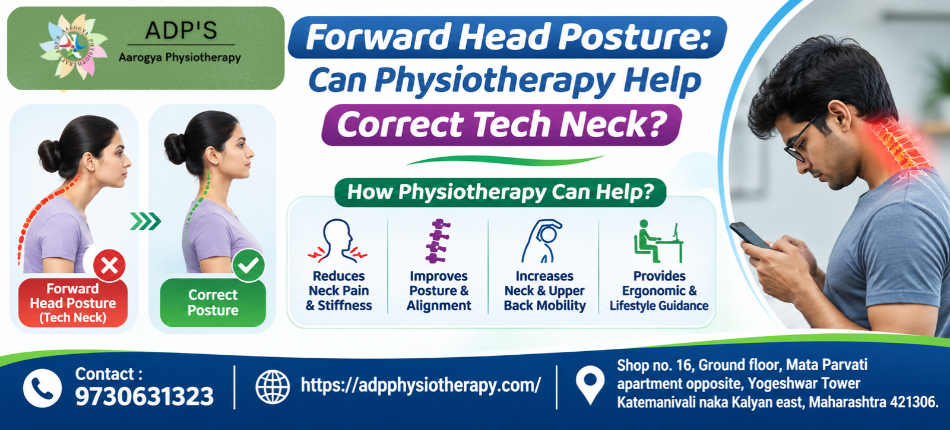
Forward Head Posture: Can Physiotherapy Help Correct Tech Neck? – ADP Physiotherapy
Forward Head Posture Physiotherapy can help people experiencing neck discomfort, muscle stiffness, headaches, and movement difficulties associated with prolonged smartphone or computer use. In today’s digital lifestyle, many individuals spend several hours looking at screens, often keeping their heads forward for extended periods.
This commonly observed position is called forward head posture, sometimes associated with the term tech neck. Although forward head posture does not automatically cause pain, prolonged static positions, limited movement, and reduced physical conditioning may contribute to discomfort in some individuals.
Physiotherapy can help address symptoms through individualized exercises, strengthening, mobility training, ergonomic guidance, and education about healthy movement habits. With professional Physiotherapy Treatment in Kalyan East, patients can receive personalized care to manage neck pain, improve mobility, and develop healthier posture habits.
At ADP Physiotherapy in Kalyan East, patients can seek professional assessment and guidance for neck pain, posture-related discomfort, and functional movement problems.
What Is Forward Head Posture?
Forward head posture describes a position in which the head sits farther forward relative to the shoulders and upper body.
In a more neutral sitting position, the head is generally balanced above the trunk. During activities such as using a smartphone or working on a laptop, the head may move forward while the upper back becomes more rounded.
This posture is common during everyday activities and is not necessarily harmful.
However, spending long periods in any position without movement may contribute to muscle fatigue, stiffness, and discomfort.
Forward head posture may be associated with:
-
Prolonged smartphone use
-
Extended computer work
-
Limited physical activity
-
Sustained sitting positions
-
Reduced neck and upper-back endurance
-
Workstations that are uncomfortable or poorly adjusted
Importantly, there is no single perfect posture that prevents all neck pain. The ability to move comfortably and vary positions throughout the day is often more important than maintaining one rigid alignment.
What Is Tech Neck?
Tech neck is an informal term used to describe neck discomfort and stiffness associated with prolonged use of smartphones, tablets, laptops, and other digital devices.
When using a screen, people often hold their necks in a bent or forward position for extended periods.
This may contribute to muscle fatigue or discomfort, particularly when combined with insufficient breaks, stress, or limited physical activity.
Tech neck is not a separate medical diagnosis. Similar symptoms can arise from muscle strain, cervical joint problems, headaches, or other conditions.
Therefore, a proper assessment is important before attributing persistent neck pain entirely to posture.
Common Symptoms of Forward Head Posture and Tech Neck
Symptoms vary depending on the individual and the underlying cause.
1. Neck Pain and Stiffness
People experiencing tech neck may notice soreness or stiffness around the neck, especially after prolonged screen use. Discomfort may increase toward the end of the working day or after remaining in one position for several hours. Physiotherapy can help assess contributing factors and recommend suitable movement strategies.
2. Shoulder and Upper Back Discomfort
Sustained sitting and repetitive activities may contribute to discomfort around the shoulders and upper back. Some individuals experience a feeling of tightness between the shoulder blades or across the upper trapezius muscles. Strengthening and movement exercises may help improve tolerance for daily activities.
3. Headaches
Some individuals with neck pain also experience headaches. Cervicogenic headaches are associated with certain neck-related conditions, but headaches have many possible causes. Frequent, severe, or unusual headaches should be assessed rather than automatically attributed to poor posture.
4. Reduced Neck Mobility
Neck discomfort may make it difficult to turn the head, look upward, or perform everyday activities comfortably. Gentle mobility exercises may help restore movement when appropriate. However, painful or restricted movement should be evaluated before beginning an exercise program.
5. Muscle Fatigue
People who work at computers for long periods may experience tiredness or aching around the neck and shoulders. This may relate to sustained muscle activity, limited movement variation, and overall physical conditioning. Regular breaks and gradual strengthening can help improve activity tolerance.
6. Tingling or Numbness
Some individuals with neck conditions experience tingling, numbness, or pain radiating into the arms. These symptoms may indicate nerve involvement rather than simple muscular discomfort. A qualified healthcare professional should evaluate persistent or worsening neurological symptoms.
What Causes Forward Head Posture?
Forward head posture is influenced by multiple factors rather than a single cause.
1. Prolonged Smartphone Usage
Looking down at a smartphone for extended periods may contribute to temporary neck discomfort and muscle fatigue. Holding the device in one position without breaks can make symptoms more noticeable. Changing positions regularly and reducing prolonged static loading may help.
2. Poorly Adjusted Workstations
A computer monitor positioned too low or a chair that does not provide comfortable support may encourage sustained awkward positions. Adjusting the workstation to suit the user’s height and working habits can improve comfort. Ergonomic changes should be combined with regular movement rather than treated as a complete solution.
3. Reduced Neck and Upper-Back Endurance
People who perform little physical activity may have lower tolerance for prolonged sitting or repetitive tasks. Exercises targeting the neck, shoulders, and upper back can help improve muscular endurance. Treatment should be progressed gradually according to individual capacity.
4. Limited Movement Throughout the Day
Remaining in one position for several hours can contribute to stiffness and discomfort. Even a comfortable posture may become tiring when maintained continuously. Frequent movement and short activity breaks can help reduce prolonged static loading.
5. Stress and Muscle Tension
Stress may contribute to increased muscle tension and heightened pain sensitivity. Some people notice more neck and shoulder discomfort during demanding work periods. Relaxation techniques, exercise, sleep management, and appropriate clinical care may help.
6. Existing Neck Conditions
Cervical joint disorders, previous injuries, or nerve-related conditions may contribute to neck pain and movement difficulties. These problems should not be diagnosed solely by observing head position. A clinical assessment helps determine whether additional investigation is needed.
Can Physiotherapy Help Correct Forward Head Posture?
Yes. Forward Head Posture Physiotherapy can help improve neck function, muscular endurance, movement confidence, and posture-related symptoms.
Physiotherapy uses an individualized approach that may include strengthening exercises, mobility training, education, ergonomic adjustments, and selected hands-on techniques.
Some patients may improve their habitual head position through targeted exercises and greater postural awareness.
However, achieving a perfectly straight posture is not necessary for everyone, and changes in posture do not always correspond directly to reductions in pain.
The primary goal is to help patients move comfortably, manage symptoms, and participate in everyday activities without unnecessary limitations.
Benefits of Forward Head Posture Physiotherapy
1. Helps Reduce Neck Pain and Discomfort
Physiotherapy can help manage certain types of mechanical neck pain through exercise, education, and individualized treatment. Strengthening and mobility exercises may improve the neck’s tolerance for daily activities. Treatment is adjusted according to symptom severity, physical capacity, and the patient’s goals.
2. Improves Neck and Shoulder Muscle Endurance
Targeted exercises can strengthen muscles supporting the neck, shoulders, and upper back. Better muscular endurance may make prolonged desk work and everyday activities more comfortable. Exercises should be performed progressively rather than forcing the neck into a fixed position.
3. Supports Better Postural Awareness
Physiotherapy can help patients recognize positions that increase discomfort and identify alternatives. The goal is not to maintain a rigid posture throughout the day but to develop comfortable movement habits. Regular position changes can be more practical than constantly trying to sit perfectly straight.
4. Improves Neck Mobility and Flexibility
Gentle movement exercises may help improve comfortable neck rotation, bending, and extension. Physiotherapists can assess which movements are restricted and recommend appropriate exercises. Mobility work should not involve forceful stretching or movements that reproduce severe pain.
5. Provides Ergonomic Guidance
A physiotherapist can suggest practical changes to screen height, seating, keyboard position, and daily working habits. These adjustments may reduce discomfort during prolonged computer use. Ergonomic advice is most effective when combined with exercise and regular movement.
6. Encourages Long-Term Self-Management
Physiotherapy helps patients understand their symptoms and develop strategies for managing recurring discomfort. Education, exercise progression, and activity modification can support long-term independence. Patients may also learn when symptoms require further medical evaluation.
Forward Head Posture Physiotherapy Treatment in Kalyan East
A physiotherapy program should begin with a detailed assessment to understand the patient’s symptoms, physical limitations, and daily activities.
1. Initial Physiotherapy Assessment
The physiotherapist reviews the patient’s medical history, symptom duration, work habits, physical activity, and previous treatments. The assessment may include neck mobility, muscle strength, neurological screening, and functional movement tests. These findings help guide an individualized treatment plan.
2. Neck Strengthening Exercises
Specific exercises may be recommended to improve the strength and endurance of the neck muscles. These can include gentle deep neck flexor exercises and progressive resistance training. Exercise selection depends on the patient’s comfort, ability, and clinical findings.
3. Upper-Back and Shoulder Strengthening
Exercises targeting the upper back, shoulder blades, and surrounding muscles may help improve movement capacity. Stronger supporting muscles can make everyday tasks more comfortable. Physiotherapists may use resistance bands, bodyweight movements, or other suitable exercises.
4. Stretching and Mobility Exercises
Gentle stretching and mobility exercises may be included when muscle tightness or restricted movement contributes to symptoms. The physiotherapist selects exercises based on the patient’s needs. Aggressive stretching is generally unnecessary and may worsen discomfort.
5. Manual Therapy
Manual therapy may be used as a short-term supportive treatment for selected patients. Techniques can include gentle joint mobilization or soft tissue treatment when clinically appropriate. Manual therapy is usually most useful when combined with active rehabilitation rather than used alone.
6. Ergonomic and Lifestyle Education
Patients may receive guidance about workstation adjustments, movement breaks, screen use, and physical activity. Education helps patients understand how to manage symptoms during work and daily routines. The focus is on comfortable, sustainable habits rather than rigid posture rules.
Best Exercises for Forward Head Posture and Tech Neck
Exercises can help improve neck movement, muscular endurance, and overall comfort.
The following examples are commonly used in rehabilitation, but they may not be suitable for every patient.
1. Chin Tuck Exercise
Chin tucks are commonly used to train controlled neck movement and deep neck flexor activation.
How to perform:
-
Sit or stand comfortably with your shoulders relaxed.
-
Gently draw your chin backward, as if making a small double chin.
-
Keep your eyes looking forward without tilting your head downward.
-
Hold briefly and relax.
-
Repeat slowly within a comfortable range.
Avoid forcing the movement or continuing if it causes dizziness, radiating pain, or increased symptoms.
2. Shoulder Blade Squeezes
This exercise helps activate muscles around the shoulder blades.
How to perform:
-
Sit or stand comfortably.
-
Gently draw your shoulder blades toward each other.
-
Avoid shrugging your shoulders.
-
Hold briefly, then relax.
-
Repeat with controlled movements.
This exercise may help improve awareness and muscular endurance around the upper back.
3. Gentle Neck Rotation
Neck rotation exercises can help maintain comfortable movement.
How to perform:
-
Sit upright in a relaxed position.
-
Slowly turn your head toward one side.
-
Move only within a comfortable range.
-
Return to the center.
-
Repeat on the opposite side.
Do not force your neck through painful or restricted movement.
4. Upper Trapezius Stretch
A gentle upper trapezius stretch may help some individuals experiencing muscular tightness.
How to perform:
-
Sit comfortably with your shoulders relaxed.
-
Slowly tilt your head toward one shoulder.
-
Stop when you feel a gentle stretch.
-
Hold briefly without pulling forcefully.
-
Return to the starting position and repeat on the other side.
Stop if you experience tingling, dizziness, or worsening pain.
5. Thoracic Extension Exercise
Thoracic extension exercises encourage movement through the upper back.
How to perform:
-
Sit in a stable chair with a supportive backrest.
-
Place your hands gently behind your head if comfortable.
-
Slowly extend your upper back over the chair’s backrest.
-
Avoid excessive neck extension.
-
Return to a comfortable sitting position.
A physiotherapist can modify this exercise according to your mobility and symptoms.
How Long Does Physiotherapy Take to Improve Tech Neck?
Recovery time varies depending on the cause of symptoms, their duration, physical conditioning, and the patient’s response to treatment.
Some people notice improvements in comfort and movement within a few weeks of appropriate exercise and activity modification.
Others with persistent neck pain or additional medical conditions may require longer rehabilitation.
There is no fixed number of sessions that guarantees posture correction or complete pain relief.
A physiotherapist should monitor progress using meaningful outcomes such as pain intensity, neck mobility, functional ability, sleep, and tolerance for daily activities.
Daily Tips to Prevent Tech Neck
Simple changes in daily habits may help reduce neck discomfort associated with prolonged screen use.
-
Keep screens at a comfortable height: Adjust your phone or monitor position to avoid remaining in an uncomfortable position for long periods.
-
Take regular movement breaks: Change positions, stand, or walk briefly during extended desk work.
-
Stay physically active: Regular exercise can improve overall muscular strength and physical capacity.
-
Avoid rigid posture rules: There is no single perfect posture. Comfortable movement and position variation are important.
-
Use supportive workstation equipment: Adjust your chair, desk, and keyboard to suit your body and working habits.
-
Manage stress and sleep: Adequate rest and stress management can support general pain management.
-
Seek professional guidance: Persistent or worsening symptoms should be evaluated rather than ignored.
When Should You Consult a Physiotherapist for Tech Neck?
Consider seeking a professional assessment if neck pain persists, repeatedly returns, or interferes with work, sleep, or everyday activities.
Physiotherapy may be helpful when you experience ongoing neck stiffness, shoulder discomfort, reduced mobility, or difficulty tolerating prolonged computer work.
However, certain symptoms require urgent medical assessment.
Seek immediate medical attention if neck pain occurs with significant trauma, new or progressive arm or leg weakness, difficulty walking, loss of coordination, or bowel or bladder changes.
Severe sudden headache, fever with marked neck stiffness, or other concerning neurological symptoms also require prompt medical evaluation.
Why Choose ADP Physiotherapy for Forward Head Posture Physiotherapy in Kalyan?
ADP Physiotherapy provides physiotherapy care in Kalyan East for patients experiencing musculoskeletal discomfort and movement-related difficulties.
1. Individualized Physiotherapy Assessment
Every patient experiences neck discomfort differently. An assessment helps identify symptoms, functional limitations, and possible contributing factors. Treatment recommendations can then be tailored to the patient’s condition and rehabilitation goals.
2. Exercise-Based Rehabilitation
Targeted strengthening, mobility, and endurance exercises may help improve neck function. Exercise programs should be progressed according to individual ability and response. This supports a practical approach to long-term symptom management.
3. Posture and Ergonomic Guidance
Patients can receive guidance on comfortable sitting positions, workstation adjustments, and movement habits. Rather than encouraging one rigid posture, physiotherapy focuses on helping patients tolerate daily activities with less discomfort.
4. Neck Pain and Mobility Management
Physiotherapy may help patients with certain types of mechanical neck pain, muscle stiffness, and movement limitations. Treatment options depend on the clinical assessment and may include exercise, education, and selected manual techniques.
5. Convenient Location in Kalyan East
ADP Physiotherapy is located at Katemanivali Naka, Kalyan East, making it accessible to patients from nearby residential and commercial areas.
Conclusion
Forward Head Posture Physiotherapy can help people manage tech neck symptoms, improve neck mobility, strengthen supporting muscles, and develop healthier movement habits.
Although prolonged screen use and sustained positions may contribute to neck discomfort, forward head posture does not automatically cause pain. Effective treatment should focus on the individual’s symptoms, physical capacity, and functional goals rather than appearance alone.
Physiotherapy may include strengthening exercises, mobility training, ergonomic guidance, and patient education to support comfortable daily activities.
If you are experiencing persistent neck pain, stiffness, or discomfort associated with smartphone and computer use, professional physiotherapy assessment can help you understand your symptoms and explore appropriate treatment options.
Book an Appointment at ADP Physiotherapy
ADP Physiotherapy – Kalyan East
9730631323
Clinic Address: Shop No. 16, Ground Floor, Mata Parvati Apartment, Opposite Yogeshwar Tower, Katemanivali Naka, Kalyan East, Maharashtra – 421306.
Better Movement. Better Comfort. Better Everyday Living!
Forward Head Posture Physiotherapy Forward Head Posture Physiotherapy Forward Head Posture Physiotherapy Forward Head Posture Physiotherapy Forward Head Posture Physiotherapy Forward Head Posture Physiotherapy Forward Head Posture Physiotherapy Forward Head Posture Physiotherapy Forward Head Posture Physiotherapy Forward Head Posture Physiotherapy Forward Head Posture Physiotherapy Forward Head Posture Physiotherapy Forward Head Posture Physiotherapy Forward Head Posture Physiotherapy Forward Head Posture Physiotherapy Forward Head Posture Physiotherapy Forward Head Posture Physiotherapy Forward Head Posture Physiotherapy Forward Head Posture Physiotherapy Forward Head Posture Physiotherapy Forward Head Posture Physiotherapy Forward Head Posture Physiotherapy