
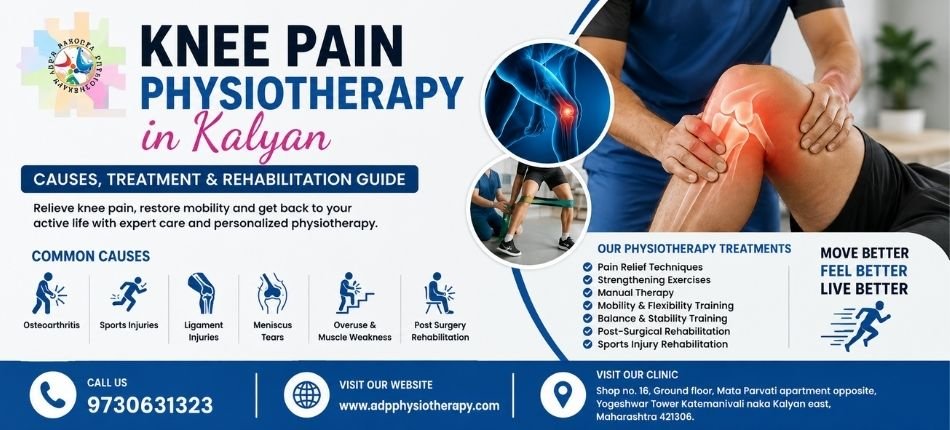
Knee Pain Physiotherapy in Kalyan : Causes, Treatment & Rehabilitation Guide – ADP Physiotherapy Clinic
Knee pain can make even simple everyday activities—walking, climbing stairs, standing from a chair, exercising, or travelling—uncomfortable. While occasional mild discomfort may settle with appropriate rest and activity modification, persistent or recurring knee pain deserves proper assessment.
Knee Pain Physiotherapy in Kalyan can help identify factors contributing to pain, restore comfortable movement, improve muscle strength, and support a gradual return to daily activities.
At ADP Physiotherapy, treatment is planned according to the individual’s symptoms, physical assessment, functional limitations, and recovery goals rather than relying on a one-size-fits-all approach.
What Causes Knee Pain?
Knee pain can develop due to injury, overuse, osteoarthritis, muscle weakness, ligament problems, meniscus injuries, or patellofemoral pain. Sports activities, sudden twisting movements, falls, or repetitive stress can also affect the knee. In some people, stiffness and reduced mobility may contribute to discomfort during walking or climbing stairs. A proper assessment helps identify the underlying cause and guides appropriate treatment.
1. Knee Osteoarthritis
Knee osteoarthritis is a common condition in which changes occur within the knee joint over time. Symptoms can include pain, stiffness, reduced mobility, and difficulty performing activities such as walking or climbing stairs.
Physiotherapy can play an important role in osteoarthritis management. A rehabilitation program may focus on improving strength, mobility, physical activity, and confidence in everyday movement.
2. Patellofemoral Pain
Pain around or behind the kneecap is often described as patellofemoral pain. It may become noticeable while climbing stairs, squatting, running, jumping, or sitting with bent knees for prolonged periods.
Treatment may involve progressive strengthening, movement retraining, activity modification, and exercises targeting the muscles around the knee and hip.
3. Ligament Injuries
The knee contains important ligaments, including the ACL, PCL, MCL, and LCL, which contribute to joint stability.
Ligament injuries can occur during sports, sudden twisting, falls, or direct trauma. Depending on the type and severity of injury, treatment may involve physiotherapy alone or rehabilitation before and after surgical treatment.
4. Meniscus Injuries
The menisci are cartilage structures that help distribute load within the knee.
Meniscal injuries may occur after twisting movements or develop alongside age-related changes. Symptoms can include pain, swelling, stiffness, clicking, or difficulty with certain movements.
Not every meniscal problem requires surgery. Appropriate management depends on symptoms, examination findings, functional limitations, and other clinical factors.
5. Sports-Related Knee Pain
Running, football, cricket, badminton, gym training, and other sports place repeated demands on the knee.
Sudden changes in training volume, inadequate recovery, injury, or reduced strength may contribute to symptoms.
A sports rehabilitation program should aim not only to reduce symptoms but also to rebuild the strength and physical capacity required for returning to the activity.
When Should You Consult a Physiotherapist for Knee Pain?
Consider seeking professional assessment if your knee pain:
- Persists or repeatedly returns
- Interferes with walking or climbing stairs
- Limits exercise or sports
- Is accompanied by recurring swelling
- Develops after an injury
- Causes a feeling of instability
- Restricts knee movement
- Continues after surgery
Prompt assessment is particularly important after significant trauma or when you cannot comfortably bear weight.
How Is Knee Pain Assessed?
Before beginning physiotherapy for knee pain, an assessment helps determine which factors may be contributing to the problem.
A physiotherapist may assess:
Pain and Symptom History
You may be asked when the problem started, which activities aggravate it, what improves it, and whether there was an injury.
Knee Movement
The range of bending and straightening of the knee may be evaluated.
Muscle Strength
Strength around the quadriceps, hamstrings, calves, hips, and other relevant muscle groups may be assessed.
Balance and Stability
For certain injuries, balance, coordination, and joint control are important parts of the assessment.
Walking and Functional Movement
The physiotherapist may observe walking, stair climbing, squatting, or other activities relevant to your symptoms.
How Can Physiotherapy Help Knee Pain?
The exact treatment plan depends on the diagnosis and assessment.
1. Pain Management
Early treatment may include education, activity modification, appropriate movement, and other physiotherapy techniques to help manage symptoms.
The aim is to create conditions that allow gradual rehabilitation rather than relying only on temporary pain relief.
2. Improve Knee Mobility
Pain and swelling can reduce knee movement.
Appropriate mobility exercises may help gradually restore comfortable bending and straightening where these movements are restricted.
3. Strengthening Exercises
Strengthening exercises are an important part of many knee physiotherapy and rehabilitation programs. Exercises may target the quadriceps, hamstrings, gluteal muscles, calves, and hip stabilizers to improve support and movement control around the knee. The intensity and difficulty should be increased gradually according to the patient’s condition and tolerance. A personalized strengthening program can help improve function and make everyday activities easier.
4. Balance and Proprioception Training
Following some knee injuries, patients may experience reduced stability or confidence.
Balance and proprioception exercises can help retrain coordination and joint control, particularly for people returning to sports or physically demanding activities.
5. Movement Retraining
Sometimes the way a person walks, squats, runs, jumps, or climbs stairs can influence symptoms.
A physiotherapist may assess these movements and provide appropriate exercises or technique modifications when relevant.
6. Manual Therapy
Manual therapy may sometimes be included as part of treatment to help manage pain or movement restrictions.
It is generally most useful when combined with an active rehabilitation program rather than being the sole treatment.
Knee Pain Exercises: Why Personalization Matters
Searching online for “best knee pain exercises” may produce hundreds of recommendations. However, the same exercises are not appropriate for every knee condition.
An exercise that is useful for one person may aggravate another person’s symptoms if the diagnosis, load, or technique differs.
A personalized program considers:
- Cause of knee pain
- Current pain level
- Strength
- Mobility
- Age
- Activity level
- Work demands
- Sports requirements
- Recovery goals
This is why assessment is important before beginning an intensive exercise program.
Physiotherapy for Knee Arthritis
Exercise is an important component of conservative management for many people with knee osteoarthritis.
A physiotherapy program may include:
- Progressive strengthening
- Mobility exercises
- Aerobic activity
- Balance training
- Activity modification
- Weight-management support where relevant
- Education about managing symptoms
The goal is to improve function and help the individual remain physically active.
Physiotherapy After Knee Surgery
Rehabilitation can be important following procedures such as ligament reconstruction, knee replacement, or other knee surgeries.
Depending on the procedure and surgeon’s instructions, physiotherapy may focus on:
Early Stage: swelling management, safe mobility, and restoring appropriate movement.
Middle Stage: progressive strengthening, balance, and functional activities.
Later Stage: advanced strengthening and preparation for work, exercise, or sports.
Recovery timelines differ, so rehabilitation should follow the individual’s procedure and clinical progress.
Can Knee Pain Be Managed Without Surgery?
Many knee conditions can initially be managed conservatively depending on the diagnosis and severity.
Physiotherapy, appropriate exercise, activity modification, and other medical management may be recommended before surgery in suitable cases.
However, surgery may be necessary for certain injuries or advanced conditions. A healthcare professional can determine the appropriate treatment after assessment.
Tips to Support Knee Health
A few habits can help manage the physical demands placed on your knees:
- Stay regularly active
- Increase exercise gradually
- Build lower-body strength
- Avoid sudden increases in training load
- Use appropriate footwear for your activities
- Warm up before demanding exercise
- Allow adequate recovery
- Avoid repeatedly pushing through significant pain
- Seek assessment for persistent symptoms
When Does Knee Pain Require Urgent Medical Attention?
Seek prompt medical evaluation if knee pain follows significant trauma and you cannot bear weight, the knee appears visibly deformed, or there is severe swelling.
A hot, significantly swollen knee accompanied by fever or feeling unwell also requires urgent medical assessment.
Why Choose ADP for Knee Pain Physiotherapy in Kalyan?
At ADP Physiotherapy, the focus is on individualized assessment and rehabilitation according to the patient’s condition and functional goals.
Treatment may include pain-management strategies, mobility exercises, strengthening, balance training, movement retraining, and a structured home exercise program where appropriate.
The goal is to help patients improve movement, rebuild strength, and return to everyday activities with greater confidence.
Conclusion
Knee pain doesn’t have one universal cause or treatment. Whether your symptoms are related to arthritis, a sports injury, muscle weakness, stiffness, or post-surgical recovery, appropriate assessment is the first step.
Knee Pain Physiotherapy in Kalyan can provide an individualized rehabilitation approach focused on improving mobility, strength, function, and confidence.
If persistent knee pain is affecting your daily routine, consider getting it assessed rather than repeatedly relying on temporary pain relief.
Knee Pain Physiotherapy in Kalyan Knee Pain Physiotherapy in Kalyan Knee Pain Physiotherapy in Kalyan Knee Pain Physiotherapy in Kalyan Knee Pain Physiotherapy in Kalyan Knee Pain Physiotherapy in Kalyan Knee Pain Physiotherapy in Kalyan Knee Pain Physiotherapy in Kalyan Knee Pain Physiotherapy in Kalyan Knee Pain Physiotherapy in Kalyan Knee Pain Physiotherapy in Kalyan Knee Pain Physiotherapy in Kalyan
Best Physiotherapy Clinic in Ambernath | ADP Physiotherapy Clinic