Dry Needling vs Manual Therapy: Understanding Different Pain Management Techniques – ADP Physiotherapy
Muscle pain, joint stiffness, sports injuries, and restricted movement can significantly affect everyday activities and overall quality of life. Physiotherapy offers various treatment techniques that help patients manage discomfort, improve mobility, and restore physical function. Among these approaches, dry needling and manual therapy are commonly used for musculoskeletal pain management.
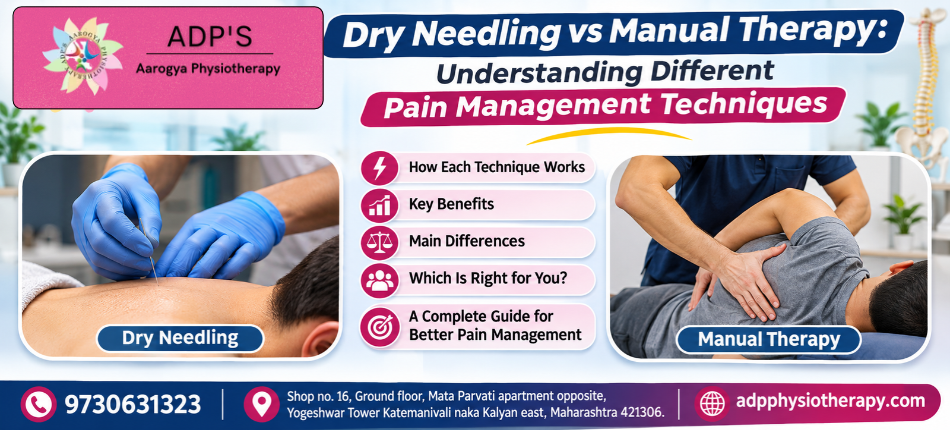
Understanding Dry Needling vs Manual Therapy is important when exploring suitable physiotherapy treatment options. While dry needling uses thin, sterile needles to target selected muscles and sensitive areas, manual therapy involves hands-on techniques to address joint stiffness, muscle discomfort, and movement restrictions.
Patients experiencing persistent muscle pain, sports-related injuries, or mobility problems can consult ADP Physiotherapy in Kalyan East for personalized assessment, appropriate pain management techniques, and rehabilitation guidance based on their individual needs.
This comprehensive guide explains the differences, benefits, applications, safety considerations, and effectiveness of both physiotherapy techniques, helping patients make informed decisions about their treatment and recovery.
What Is Dry Needling Therapy?
Dry needling is a physiotherapy technique that involves inserting thin, sterile needles into selected muscles or soft tissues to help manage musculoskeletal pain and movement restrictions.
It is commonly associated with the treatment of myofascial trigger points, which are sensitive areas within muscles that may contribute to localized or referred pain.
Unlike an injection, dry needling does not involve administering medication into the body. The treatment aims to influence muscle sensitivity, reduce discomfort, and improve movement tolerance in suitable patients.
Dry needling is generally used alongside therapeutic exercises and other rehabilitation techniques rather than as a standalone treatment.
How Does Dry Needling Work?
During a dry needling session, a trained healthcare professional assesses the patient’s symptoms, muscle tenderness, movement restrictions, and physical condition before identifying suitable treatment areas.
Needle stimulation may influence pain processing, muscle activity, and sensitivity within the treated area. Some patients may experience a brief muscle twitch or mild discomfort during treatment.
The response to dry needling varies between individuals. While some patients experience short-term pain relief, others may require a different rehabilitation approach depending on the underlying condition.
Common Conditions Treated with Dry Needling
Dry needling may be considered as a supportive treatment option for selected musculoskeletal conditions, including:
- Neck and shoulder muscle pain
- Lower back pain
- Myofascial pain syndrome
- Muscle tightness and tenderness
- Sports-related muscle discomfort
- Selected tension-type headaches
- Upper back pain
- Hip and gluteal muscle pain
- Repetitive strain injuries
- Movement restrictions associated with muscular discomfort
A thorough clinical assessment is necessary to determine whether dry needling is suitable for a particular condition.
Benefits of Dry Needling Therapy
Dry needling may provide short-term benefits for selected patients experiencing muscle-related pain and restricted movement.
1. Helps Manage Muscle Pain
Dry needling targets selected sensitive muscle areas that may contribute to discomfort. It may help reduce pain intensity and improve movement tolerance when combined with appropriate physiotherapy exercises.
2. Reduces Muscle Tightness
Some patients experience reduced muscle tension and tenderness following dry needling. This may make it easier to participate in stretching, strengthening, and mobility exercises.
3. Supports Improved Range of Motion
Muscle discomfort can restrict joint movement and affect everyday activities. Dry needling may temporarily improve movement tolerance in selected patients, particularly when incorporated into a structured rehabilitation programme.
4. Supports Sports Injury Rehabilitation
Athletes and physically active individuals may experience muscular discomfort due to repetitive movements, training demands, or overuse. Dry needling may be considered as a complementary technique alongside progressive strengthening and sports rehabilitation.
5. Complements Exercise-Based Physiotherapy
Reducing muscle sensitivity may help some patients participate more comfortably in therapeutic exercises. However, dry needling does not replace active rehabilitation, muscle strengthening, or appropriate management of the underlying condition.
What Is Manual Therapy?
Manual therapy is a hands-on physiotherapy approach used to manage musculoskeletal pain, joint stiffness, soft tissue discomfort, and movement limitations.
A trained physiotherapist uses controlled movements, pressure, stretching, and mobilization techniques according to the patient’s physical condition and treatment requirements.
Unlike dry needling, manual therapy does not require needles or penetration of the skin. It may involve treatment of muscles, joints, connective tissues, and other structures that contribute to movement-related discomfort.
Manual therapy is often combined with therapeutic exercises, movement education, and functional rehabilitation to support recovery.
Common Types of Manual Therapy Techniques
Manual therapy includes several treatment approaches that can be selected according to the patient’s symptoms and clinical assessment.
1. Joint Mobilization
Joint mobilization involves controlled movements applied to a joint to help manage stiffness, discomfort, and restricted mobility. This technique may be used for suitable patients experiencing shoulder, knee, neck, or spinal movement limitations.
2. Soft Tissue Mobilization
Soft tissue mobilization involves hands-on techniques directed towards muscles and surrounding tissues. It may help manage muscle tenderness, stiffness, and movement-related discomfort.
3. Myofascial Release
Myofascial release involves controlled pressure and stretching techniques applied to soft tissues. It may help some patients experience temporary improvements in comfort and movement.
4. Therapeutic Massage
Therapeutic massage involves techniques designed to promote relaxation and manage muscular discomfort. It can be used as a supportive component of an individualized physiotherapy programme.
5. Manual Stretching
Manual stretching involves assisted movements intended to improve flexibility and movement tolerance. The intensity and duration of stretching are adjusted according to the patient’s condition and comfort.
6. Joint Manipulation
Joint manipulation involves a controlled thrust applied to a selected joint by an appropriately trained professional. This technique is not suitable for every patient and requires careful screening for potential risks and contraindications.
Common Conditions Treated with Manual Therapy
Manual therapy may be considered for various musculoskeletal conditions, depending on the results of a physical assessment.
Common applications include:
- Neck pain and stiffness
- Lower back pain
- Shoulder pain and restricted movement
- Joint stiffness
- Sports injuries
- Muscular discomfort
- Selected knee and hip conditions
- Postural or movement-related discomfort
- Rehabilitation following certain injuries
- Restricted functional mobility
The choice of manual therapy technique depends on the underlying diagnosis, severity of symptoms, and individual treatment goals.
Benefits of Manual Therapy
Manual therapy can provide several potential benefits when used appropriately within a comprehensive physiotherapy programme.
1. Improves Joint Mobility
Controlled joint mobilization techniques may help reduce stiffness and improve movement in selected patients. Better movement can support everyday activities such as walking, bending, reaching, and lifting.
2. Helps Reduce Muscle Discomfort
Hands-on soft tissue techniques may help reduce muscle tenderness and discomfort. These techniques can complement strengthening and stretching programmes designed to address movement-related problems.
3. Supports Injury Rehabilitation
Manual therapy may assist rehabilitation following certain musculoskeletal injuries by improving movement tolerance and helping patients gradually return to their daily activities.
4. Promotes Flexibility and Movement
Appropriate stretching and mobilization techniques may help improve flexibility in patients experiencing restricted movement. These improvements can support participation in active rehabilitation.
5. Helps Manage Joint-Related Pain
Selected manual therapy techniques may provide short-term relief from joint-related discomfort. The effectiveness of treatment depends on the underlying condition and the patient’s response to therapy.
Dry Needling vs Manual Therapy: Key Differences
Although both physiotherapy techniques aim to manage pain and improve physical function, they differ in their treatment methods, applications, and patient experience.
| Factor | Dry Needling | Manual Therapy |
|---|---|---|
| Treatment method | Uses thin, sterile needles | Uses hands-on techniques |
| Primary focus | Selected muscles and sensitive soft tissues | Muscles, joints, and surrounding tissues |
| Skin penetration | Yes, minimally invasive | No, generally non-invasive |
| Muscle discomfort | May help manage localized muscular pain | May help manage broader muscle discomfort |
| Joint mobility | May indirectly improve movement tolerance | Can directly address joint mobility |
| Treatment sensation | Brief prick, twitch, or soreness may occur | Pressure, stretching, or controlled movement |
| Common applications | Myofascial pain and localized muscle tenderness | Joint stiffness and musculoskeletal pain |
| Potential side effects | Soreness, bruising, minor bleeding | Temporary soreness or stiffness |
| Rehabilitation approach | Used alongside active physiotherapy | Used alongside active physiotherapy |
| Long-term effectiveness | Depends on condition and rehabilitation | Depends on condition and rehabilitation |
Neither technique is universally superior. The most appropriate treatment depends on the patient’s symptoms, clinical findings, preferences, and recovery goals.
Dry Needling vs Manual Therapy: Which Is Better for Muscle Pain?
When comparing Dry Needling vs Manual Therapy for muscle pain, the most suitable technique depends on the source and characteristics of the discomfort.
Dry needling may be considered for selected patients experiencing localized muscle tenderness or myofascial trigger points. It may help reduce pain sensitivity in the short term and improve participation in rehabilitation exercises.
Manual therapy may be more suitable when muscle discomfort is accompanied by joint stiffness, restricted mobility, or broader movement-related limitations.
In some cases, physiotherapists may recommend a combination of both techniques. However, combining treatments is not automatically more effective, and the treatment plan should be based on individual needs and measurable progress.
Dry Needling vs Manual Therapy for Lower Back Pain
Lower back pain can develop due to various factors, including muscle strain, movement restrictions, physical overuse, and underlying spinal conditions. Identifying the cause of discomfort is important before selecting an appropriate treatment technique.
Dry needling may provide short-term relief for selected patients experiencing chronic lower back pain associated with muscle tenderness. Manual therapy, particularly appropriate joint mobilization, may help manage stiffness and improve movement tolerance.
Both approaches are generally most useful when combined with exercise-based rehabilitation, patient education, and suitable lifestyle modifications.
Patients experiencing severe or progressive neurological symptoms require medical evaluation rather than routine pain management treatments.
Which Technique Is Better for Sports Injuries?
Sports injuries may affect muscles, tendons, ligaments, and joints, resulting in pain and reduced physical performance. The appropriate rehabilitation approach depends on the type of injury and its stage of recovery.
Dry needling may be considered for selected muscle-related symptoms, while manual therapy may help address restricted joint movement and soft tissue discomfort.
A comprehensive sports physiotherapy programme may also include progressive strengthening, balance training, movement correction, and sport-specific rehabilitation. These active treatment methods play an important role in helping athletes safely return to physical activities.
Can Dry Needling and Manual Therapy Be Combined?
Yes, dry needling and manual therapy can be combined when clinically appropriate. A physiotherapist may recommend both techniques to address different aspects of a patient’s musculoskeletal condition.
For example, dry needling may be considered for localized muscle tenderness, while manual therapy may address associated joint stiffness or restricted movement.
A comprehensive rehabilitation programme may include:
- Dry needling for selected muscular symptoms
- Manual therapy for mobility limitations
- Therapeutic stretching exercises
- Progressive muscle strengthening
- Movement and ergonomic education
- Functional rehabilitation
- Personalized home exercise programmes
The combination should be based on clinical assessment rather than assuming that more treatments will produce better results. Regular reassessment helps determine whether each technique is contributing to meaningful improvement.
Is Dry Needling Painful?
Dry needling experiences vary from person to person. Some patients feel a slight prick when the needle is inserted, while others may experience temporary discomfort or a brief muscle twitch.
Mild soreness, bruising, or tenderness may occur after treatment and generally settles within a short period. Patients should inform their physiotherapist if they experience significant discomfort during or after the session.
Dry needling should only be performed by an appropriately trained healthcare professional using sterile, single-use needles and suitable infection-control procedures.
Are Dry Needling and Manual Therapy Safe?
Both techniques can be appropriate for selected patients when performed by trained professionals following a thorough clinical assessment. However, neither treatment is completely risk-free.
Possible Side Effects of Dry Needling
Common temporary side effects may include muscle soreness, mild bruising, minor bleeding, dizziness, or discomfort around the treated area.
Although uncommon, serious complications such as infection, nerve injury, or pneumothorax (collapsed lung) can occur. Sudden chest pain or difficulty breathing following dry needling requires immediate emergency medical attention.
Patients should inform their physiotherapist about blood-thinning medication, bleeding disorders, pregnancy, immune system conditions, skin infections, and other relevant medical concerns before undergoing treatment.
Possible Side Effects of Manual Therapy
Manual therapy may cause temporary soreness, stiffness, or an increase in discomfort following treatment. Certain techniques, particularly high-velocity spinal manipulation, carry additional risks and require careful screening.
Patients with suspected fractures, severe osteoporosis, acute injuries, significant neurological symptoms, or other serious medical conditions may require modified treatment or medical clearance.
A qualified healthcare professional should explain the potential benefits, risks, and alternatives before beginning treatment.
How Many Physiotherapy Sessions Are Required?
The number of dry needling or manual therapy sessions required varies depending on the patient’s underlying condition, symptom severity, duration of pain, physical capabilities, and treatment response.
Some patients may experience temporary improvement after a single session, while others may benefit from a longer rehabilitation programme. Treatment frequency should be determined through regular assessment and measurable improvements in movement and physical function.
Long-term recovery generally requires more than passive treatments. Following suitable home exercises, maintaining physical activity, and addressing contributing factors can play an important role in supporting rehabilitation.
How to Choose Between Dry Needling and Manual Therapy
Choosing the right pain management technique requires an understanding of the underlying condition, patient preferences, and individual rehabilitation goals.
Dry needling may be considered when selected muscular trigger points or localized muscle tenderness contribute to symptoms. Manual therapy may be appropriate when joint stiffness, soft tissue discomfort, or mobility restrictions are prominent.
Patients who are uncomfortable with needles can discuss non-invasive treatment alternatives with their physiotherapist.
A detailed physical assessment can help determine whether dry needling, manual therapy, exercise-based rehabilitation, or a combination of techniques is appropriate.
The Importance of Exercise in Long-Term Pain Management
Although dry needling and manual therapy may help manage symptoms, active rehabilitation is an essential component of many physiotherapy treatment programmes.
Therapeutic exercises help patients develop muscle strength, improve flexibility, increase movement confidence, and gradually restore functional abilities.
An individualized exercise programme may include mobility exercises, progressive resistance training, balance exercises, walking programmes, and condition-specific movements.
Combining appropriate symptom management techniques with active rehabilitation can help patients work towards sustainable improvements rather than relying exclusively on temporary pain relief.
When Should You Consult a Physiotherapist?
Professional physiotherapy assessment may be helpful if you experience recurring muscle pain, persistent joint stiffness, reduced flexibility, sports-related discomfort, or difficulty performing everyday activities.
Consult a healthcare professional if symptoms continue despite appropriate self-care or if discomfort repeatedly interferes with work, exercise, or sleep.
Seek urgent medical attention if pain is accompanied by significant trauma, fever, rapidly worsening muscle weakness, unexplained severe symptoms, or loss of bladder or bowel control.
Early assessment can help identify the underlying cause and determine whether physiotherapy, medical treatment, or specialist referral is necessary.
Pain Management and Physiotherapy at ADP Physiotherapy in Kalyan East
Effective pain management begins with understanding the underlying cause of discomfort rather than focusing exclusively on temporary symptom relief.
Patients experiencing muscle pain, joint stiffness, sports injuries, or movement restrictions can consult ADP Physiotherapy in Kalyan East to discuss suitable physiotherapy and rehabilitation options.
An individualized rehabilitation programme may focus on:
- Detailed physical assessment
- Personalized pain management strategies
- Appropriate dry needling techniques
- Manual therapy and joint mobilization
- Muscle strengthening exercises
- Flexibility and mobility improvement
- Sports injury rehabilitation
- Movement and ergonomic guidance
- Long-term functional recovery
The objective of physiotherapy is to help patients manage discomfort, improve mobility, and gradually return to their everyday activities through suitable evidence-informed treatment approaches.
Frequently Asked Questions About Dry Needling vs Manual Therapy
1. What is the main difference between dry needling and manual therapy?
Dry needling involves inserting thin, sterile needles into selected muscles or soft tissues, while manual therapy uses hands-on techniques to address muscle discomfort, joint stiffness, and movement restrictions.
2. Is dry needling better than manual therapy?
Neither technique is better for every condition. The appropriate treatment depends on the underlying cause of pain, clinical assessment, patient preferences, and rehabilitation goals.
3. Can dry needling and manual therapy be performed together?
Yes, both techniques may be used within the same rehabilitation programme when clinically appropriate. The treatment combination should be based on individual needs and response to therapy.
4. Is dry needling the same as acupuncture?
Although both techniques use thin needles, dry needling and acupuncture differ in their assessment frameworks, treatment approaches, and selection of treatment points.
5. Does manual therapy require needles?
No, manual therapy generally involves hands-on techniques such as joint mobilization, soft tissue mobilization, therapeutic massage, and assisted stretching.
6. Can dry needling help with chronic pain?
Dry needling may provide short-term pain relief for selected musculoskeletal conditions. Evidence for sustained long-term benefits remains limited, and treatment should generally be combined with active rehabilitation.
7. Is manual therapy suitable for everyone?
No. Manual therapy techniques should be selected according to the patient’s medical history, clinical condition, and physical assessment. Certain conditions may require medical clearance or alternative treatments.
8. What should I do after dry needling or manual therapy?
Follow the advice provided by your physiotherapist, perform recommended exercises, and maintain appropriate physical activity. Report severe, unusual, or persistent symptoms to a healthcare professional.
9. How long do the benefits of dry needling last?
The duration of symptom relief varies between individuals. Some patients experience short-term improvements, while others may notice limited benefits. Active rehabilitation can help address broader movement and functional goals.
10. Where can I get physiotherapy for pain management in Kalyan East?
Patients experiencing muscular pain, joint stiffness, sports injuries, or movement limitations can consult ADP Physiotherapy in Kalyan East for personalized physical assessment and rehabilitation guidance.
Conclusion
Understanding Dry Needling vs Manual Therapy can help patients make informed decisions about their physiotherapy treatment options. While dry needling focuses on selected muscles and sensitive soft tissues, manual therapy uses hands-on techniques to address stiffness, discomfort, and restricted movement.
Both techniques may offer benefits for suitable patients, especially when combined with therapeutic exercises, muscle strengthening, movement education, and personalized rehabilitation.
If you are experiencing persistent muscle pain, joint stiffness, or mobility problems, consult ADP Physiotherapy in Kalyan East to explore suitable pain management and physiotherapy treatment options.
Take the first step towards improved mobility, better physical function, and long-term musculoskeletal health by scheduling a professional assessment.
Dry Needling vs Manual Therapy Dry Needling vs Manual Therapy Dry Needling vs Manual Therapy Dry Needling vs Manual Therapy Dry Needling vs Manual Therapy Dry Needling vs Manual Therapy Dry Needling vs Manual Therapy Dry Needling vs Manual Therapy Dry Needling vs Manual Therapy Dry Needling vs Manual Therapy Dry Needling vs Manual Therapy Dry Needling vs Manual Therapy Dry Needling vs Manual Therapy Dry Needling vs Manual Therapy Dry Needling vs Manual Therapy Dry Needling vs Manual Therapy Dry Needling vs Manual Therapy Dry Needling vs Manual Therapy Dry Needling vs Manual Therapy Dry Needling vs Manual Therapy Dry Needling vs Manual Therapy Dry Needling vs Manual Therapy Dry Needling vs Manual Therapy Dry Needling vs Manual Therapy