Neuromuscular Re-Education: How Physiotherapy Improves Muscle Coordination – ADP Physiotherapy
Neuromuscular Re-Education is a physiotherapy approach that helps improve communication between the nervous system and muscles, supporting better coordination, balance, posture and movement control. Injuries, neurological conditions, surgeries and prolonged inactivity can affect the body’s ability to perform coordinated movements.
At ADP Physiotherapy, patients can explore personalized physiotherapy and rehabilitation approaches based on their physical condition, mobility limitations and recovery goals.
Through targeted therapeutic exercises, balance training and functional movement practice, neuromuscular rehabilitation can help patients improve muscle control and perform everyday activities more confidently.
What Is Neuromuscular Re-Education?
Neuromuscular Re-Education is a therapeutic approach designed to improve the interaction between the brain, nerves and muscles. It focuses on restoring effective movement patterns, improving muscular coordination and enhancing functional stability.
When an injury, surgery or neurological condition affects the body, normal movement patterns may become disrupted. Patients may experience muscle weakness, reduced balance, poor coordination or difficulty controlling specific movements.
Physiotherapists use targeted exercises and movement training to help patients relearn or improve these movements. The treatment programme is customized according to individual physical abilities and rehabilitation requirements.
How Does the Neuromuscular System Work?
The neuromuscular system consists of the nervous system and muscles working together to produce controlled movements. The brain sends signals through the spinal cord and peripheral nerves, allowing muscles to contract and relax appropriately.
Sensory information from muscles, joints and other structures also helps the brain understand body position and movement. This ability is known as proprioception.
When communication between these systems becomes impaired, patients may experience difficulties with walking, standing, maintaining balance or performing routine physical activities.
Neuromuscular Re-Education uses repeated, purposeful movement practice and sensory feedback to help improve these functions.
Common Causes of Poor Muscle Coordination
Several medical conditions and physical factors can affect muscle coordination and movement control.
1. Sports Injuries
Sports-related injuries can affect muscles, ligaments, joints and surrounding tissues. Even after an injury heals, patients may experience reduced stability, altered movement patterns and difficulty controlling the affected body part.
2. Neurological Conditions
Conditions such as stroke, Parkinson’s disease and certain peripheral nerve disorders can affect communication between the nervous system and muscles. Neuromuscular rehabilitation may help suitable patients improve functional movement and physical independence.
3. Post-Surgical Muscle Weakness
Following orthopedic surgery, patients may experience reduced muscle activation, joint stiffness and movement limitations. Physiotherapy can help restore muscle control and gradually improve functional abilities.
4. Prolonged Physical Inactivity
Extended periods of bed rest, immobilization or a sedentary lifestyle can contribute to muscle weakness, reduced balance and decreased movement efficiency.
5. Poor Movement Patterns and Postural Habits
Repeated uncomfortable movements and prolonged static positions may contribute to muscular imbalances and inefficient movement patterns. Physiotherapy can help patients develop better movement awareness and control.
6. Age-Related Physical Changes
Ageing may affect muscle strength, reaction time, balance and coordination. Appropriate rehabilitation exercises can help older adults maintain mobility and reduce certain fall risks.
Signs That You May Need Neuromuscular Rehabilitation
Patients experiencing the following difficulties may benefit from a professional physiotherapy assessment:
-
Poor balance and frequent loss of stability.
-
Difficulty coordinating arm or leg movements.
-
Muscle weakness following injury or surgery.
-
Difficulty walking or climbing stairs.
-
Reduced joint stability.
-
Abnormal walking patterns.
-
Difficulty maintaining posture.
-
Reduced awareness of body position.
-
Difficulty performing everyday physical activities.
-
Reduced confidence during movement.
Sudden loss of coordination, facial drooping, speech difficulties or sudden limb weakness requires emergency medical attention.
How Physiotherapy Improves Muscle Coordination
Physiotherapy uses structured rehabilitation techniques to improve muscle activation, movement awareness and functional control.
1. Balance and Stability Training
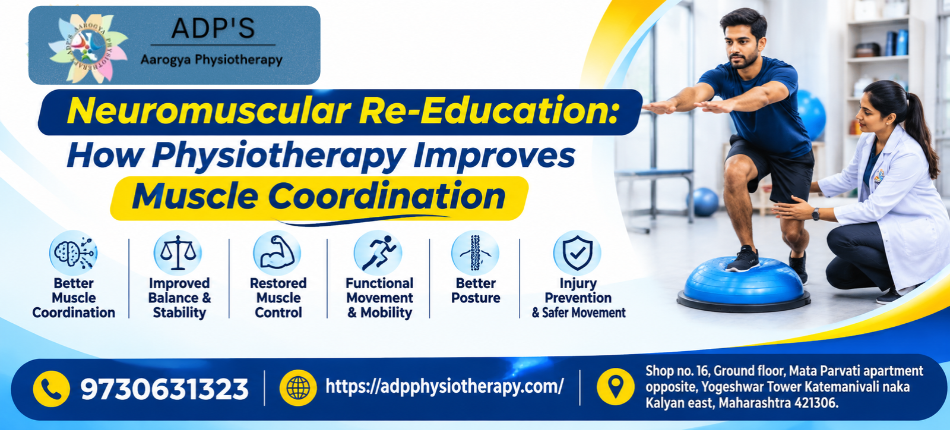
Balance training helps patients improve their ability to maintain stability during standing, walking and other physical activities. Exercises may include supported single-leg standing, controlled weight shifting and dynamic balance activities.
These exercises are gradually progressed according to the patient’s physical abilities and safety requirements.
2. Proprioceptive Training
Proprioception refers to the body’s ability to recognize joint position and movement without relying entirely on vision.
Proprioceptive exercises help patients improve body awareness, joint control and movement accuracy. These exercises may be particularly useful during rehabilitation following ligament injuries, ankle sprains and certain orthopedic surgeries.
3. Muscle Activation Exercises
Muscle activation exercises focus on improving the ability to engage specific muscles during movement. Following an injury or surgery, certain muscles may become difficult to activate effectively.
Targeted exercises can help patients improve muscular recruitment and develop better control during functional activities.
4. Functional Movement Training
Functional movement training involves practising movements commonly performed during everyday life, such as standing up from a chair, walking, reaching, bending and climbing stairs.
Repeated practice can help patients improve movement efficiency and develop greater confidence in performing daily activities.
5. Gait Training
Gait training focuses on improving walking patterns, balance, step coordination and weight distribution.
Physiotherapists may use walking exercises, visual feedback and appropriate assistive devices to help patients improve mobility safely.
6. Postural Control Exercises
Postural training helps improve awareness and control of body alignment during sitting, standing and movement.
Strengthening supporting muscles and practising controlled movements can help patients maintain functional stability and reduce unnecessary muscular strain.
7. Biofeedback and Sensory Feedback Techniques
Biofeedback, visual cues, verbal instructions and tactile feedback may be used during Neuromuscular Re-Education to help patients understand and improve their movement patterns.
These techniques can provide information about muscle activation and movement performance, allowing patients to practise more effectively.
7 Key Benefits of Neuromuscular Re-Education
1. Improves Muscle Coordination
Targeted rehabilitation exercises help patients develop better control over muscle activation and movement. Improved coordination can make everyday activities easier and more efficient.
2. Enhances Balance and Stability
Balance exercises can improve postural control and stability during movement. This may be particularly beneficial for older adults and patients recovering from injuries or neurological conditions.
3. Supports Injury and Post-Surgical Recovery
Neuromuscular rehabilitation can help patients restore movement patterns and muscular control following injuries or surgical procedures. It can complement strengthening and mobility exercises during recovery.
4. Improves Body Awareness
Proprioceptive training helps patients develop a better understanding of body position, joint movement and weight distribution, supporting more controlled physical activities.
5. Supports Better Postural Control
Targeted physiotherapy exercises can improve the coordination of muscles responsible for maintaining posture and stability during daily activities.
6. Helps Reduce the Risk of Certain Injuries
Improved balance, muscular control and movement awareness may help reduce the risk of certain falls and recurring musculoskeletal injuries when combined with appropriate rehabilitation.
7. Promotes Functional Independence
Neuromuscular Re-Education can help suitable patients improve their ability to perform routine activities such as walking, standing, reaching and climbing stairs with greater confidence.
Conditions That May Benefit from Neuromuscular Re-Education
| Medical Condition | Rehabilitation Objective |
|---|---|
| Stroke | Improve functional movement and coordination |
| Parkinson’s Disease | Support balance, walking and movement control |
| Sports Injuries | Restore muscular control and joint stability |
| ACL Injuries | Improve knee stability and proprioception |
| Ankle Sprains | Improve balance and ankle coordination |
| Joint Replacement Surgery | Restore functional movement and muscle activation |
| Peripheral Nerve Injuries | Support muscle activation where appropriate |
| Age-Related Balance Problems | Improve stability and reduce fall risks |
| Post-Surgical Weakness | Improve muscular control and mobility |
| Musculoskeletal Conditions | Develop efficient movement patterns |
The suitability and effectiveness of treatment depend on the underlying condition, its severity and individual rehabilitation requirements.
Common Neuromuscular Re-Education Exercises
Physiotherapists may recommend different exercises based on the patient’s physical assessment and rehabilitation goals.
| Exercise | Potential Benefits |
|---|---|
| Supported Single-Leg Standing | Improves balance and stability |
| Controlled Weight Shifting | Improves weight distribution and movement control |
| Heel-to-Toe Walking | Supports walking coordination |
| Sit-to-Stand Exercises | Improves functional muscle activation |
| Balance Board Exercises | Enhances proprioception and joint control |
| Controlled Reaching Exercises | Improves upper-body coordination |
| Step-Up Exercises | Supports lower-limb coordination |
| Core Stability Exercises | Improves trunk control |
| Targeted Muscle Activation | Enhances muscular recruitment |
| Hand-Eye Coordination Exercises | Supports coordinated upper-limb movements |
These exercises should be selected and progressed under professional guidance, particularly for patients with neurological conditions, recent surgeries or an increased risk of falling.
Neuromuscular Re-Education vs Traditional Strength Training
Although both approaches are important components of physiotherapy, they have different rehabilitation objectives.
| Feature | Neuromuscular Re-Education | Strength Training |
|---|---|---|
| Primary Focus | Muscle coordination and movement control | Muscle strength and endurance |
| Exercise Approach | Balance, feedback and controlled movement | Resistance-based exercises |
| Nervous System Involvement | Emphasizes sensory feedback and motor control | Emphasizes force production and muscular adaptation |
| Functional Benefits | Improved coordination and stability | Improved physical strength |
| Common Applications | Neurological and orthopedic rehabilitation | Weakness and physical conditioning |
| Rehabilitation Goals | Efficient movement patterns | Increased muscular capacity |
Physiotherapists often combine both approaches to develop a comprehensive rehabilitation programme.
Role of Neuroplasticity in Neuromuscular Rehabilitation
Neuroplasticity refers to the nervous system’s ability to adapt and reorganize in response to learning, experience and certain injuries.
Repeated, meaningful and task-specific movement practice can support motor learning and nervous system adaptation. This principle is particularly relevant in neurological rehabilitation, including stroke recovery.
Through structured physiotherapy sessions, patients can practise functional movements and develop strategies to improve physical performance. However, the extent of recovery varies depending on the underlying condition and individual circumstances.
For additional information about neurological rehabilitation, patients can refer to the National Institute of Neurological Disorders and Stroke (NINDS).
What to Expect During a Neuromuscular Re-Education Session
A physiotherapy session generally begins with an assessment of the patient’s symptoms, medical history, muscle strength, balance, coordination and functional mobility.
Based on the assessment, a physiotherapist may develop a personalized rehabilitation programme involving:
-
Muscle strength and movement assessment.
-
Balance and coordination evaluation.
-
Targeted muscle activation exercises.
-
Proprioceptive and stability training.
-
Functional movement practice.
-
Postural and walking exercises.
-
Regular progress assessment.
-
Professionally recommended home exercises.
The difficulty and intensity of exercises are gradually adjusted according to the patient’s progress and physical abilities.
How Long Does Neuromuscular Re-Education Take?
The duration of neuromuscular rehabilitation varies from patient to patient. Factors influencing recovery include the type of injury or medical condition, severity of muscle weakness, age, overall health and consistency of rehabilitation.
Some patients may notice improvements within several weeks, while individuals with complex neurological or orthopedic conditions may require longer rehabilitation programmes.
Regular physiotherapy sessions, appropriate home exercises and periodic assessments can support gradual functional improvement.
Lifestyle Tips to Improve Muscle Coordination
Healthy lifestyle habits can complement physiotherapy and support physical well-being.
-
Maintain regular physical activity according to your abilities.
-
Follow professionally recommended rehabilitation exercises.
-
Avoid prolonged physical inactivity.
-
Maintain comfortable sitting and standing positions.
-
Consume a balanced and nutritious diet.
-
Get adequate sleep and rest.
-
Wear appropriate footwear during physical activities.
-
Avoid exercises that cause significant pain or instability.
-
Attend regular physiotherapy follow-ups.
Consistency and appropriate exercise progression are important for developing better muscular control.
Why Choose ADP Physiotherapy for Neuromuscular Rehabilitation in Kalyan?
Effective rehabilitation requires a personalized approach that considers the patient’s physical condition, functional limitations and recovery objectives.
ADP Physiotherapy in Kalyan East focuses on helping patients improve physical mobility, movement control and functional abilities through appropriate physiotherapy and rehabilitation approaches.
Key Areas of Physiotherapy and Rehabilitation
-
Personalized physical assessment.
-
Muscle coordination training.
-
Balance and stability exercises.
-
Neurological rehabilitation.
-
Orthopedic rehabilitation.
-
Post-surgical rehabilitation.
-
Functional movement training.
-
Muscle strengthening exercises.
-
Postural control and mobility improvement.
-
Patient education and home exercise guidance.
Patients experiencing muscle weakness, reduced coordination or mobility difficulties can consult ADP Physiotherapy to discuss suitable rehabilitation options.
Frequently Asked Questions (FAQs)
1. What is Neuromuscular Re-Education in physiotherapy?
It is a rehabilitation approach that focuses on improving communication between the nervous system and muscles to enhance coordination, balance, posture and movement control.
2. Can physiotherapy improve muscle coordination?
Yes. Targeted therapeutic exercises, balance training, sensory feedback and functional movement practice can help suitable patients improve muscle coordination and physical control.
3. Is Neuromuscular Re-Education beneficial after surgery?
It may help patients restore muscle activation, joint stability and functional movement following certain orthopedic surgeries when incorporated into an appropriate rehabilitation programme.
4. Can neuromuscular rehabilitation help stroke patients?
Neuromuscular rehabilitation may support stroke patients in improving functional movement, balance and coordination. Treatment should be tailored to individual neurological and physical abilities.
5. Is Neuromuscular Re-Education painful?
Exercises are generally adapted to the patient’s comfort and physical abilities. Significant pain, dizziness or worsening symptoms should be reported to the treating physiotherapist.
6. Can older adults benefit from neuromuscular rehabilitation?
Yes. Appropriate balance, coordination and functional movement exercises can help older adults improve mobility, stability and confidence during everyday activities.
7. Can neuromuscular exercises be performed at home?
Yes, selected exercises can be performed at home after professional assessment and instruction. Patients with balance difficulties or neurological conditions may require supervision.
8. Where can I get neuromuscular rehabilitation in Kalyan?
Patients can consult ADP Physiotherapy in Kalyan East for a physical assessment and personalized physiotherapy recommendations.
Conclusion
Muscle coordination, balance and movement control are essential for maintaining physical independence and performing everyday activities comfortably.
Neuromuscular Re-Education is an important physiotherapy approach that can help suitable patients improve muscular activation, proprioception, functional stability and movement efficiency.
Through personalized therapeutic exercises, balance training and functional rehabilitation, patients can work towards improved mobility and greater confidence during daily activities.
If you are experiencing muscle weakness, poor coordination or movement difficulties, consult ADP Physiotherapy in Kalyan East to explore appropriate rehabilitation options.
Improve Muscle Coordination. Restore Movement. Build Confidence with ADP Physiotherapy.
Contact ADP Physiotherapy
Website: https://adpphysiotherapy.com/
Contact: 9730631323
Address: Shop No. 16, Ground Floor, Mata Parvati Apartment, Opposite Yogeshwar Tower, Katemanivali Naka, Kalyan East, Maharashtra – 421306.
Neuromuscular Re-Education Neuromuscular Re-Education Neuromuscular Re-Education Neuromuscular Re-Education Neuromuscular Re-Education Neuromuscular Re-Education Neuromuscular Re-Education Neuromuscular Re-Education Neuromuscular Re-Education Neuromuscular Re-Education Neuromuscular Re-Education Neuromuscular Re-Education Neuromuscular Re-Education Neuromuscular Re-Education Neuromuscular Re-Education Neuromuscular Re-Education Neuromuscular Re-Education Neuromuscular Re-Education Neuromuscular Re-Education Neuromuscular Re-Education Neuromuscular Re-Education Neuromuscular Re-Education Neuromuscular Re-Education Neuromuscular Re-Education Neuromuscular Re-Education Neuromuscular Re-Education Neuromuscular Re-Education