
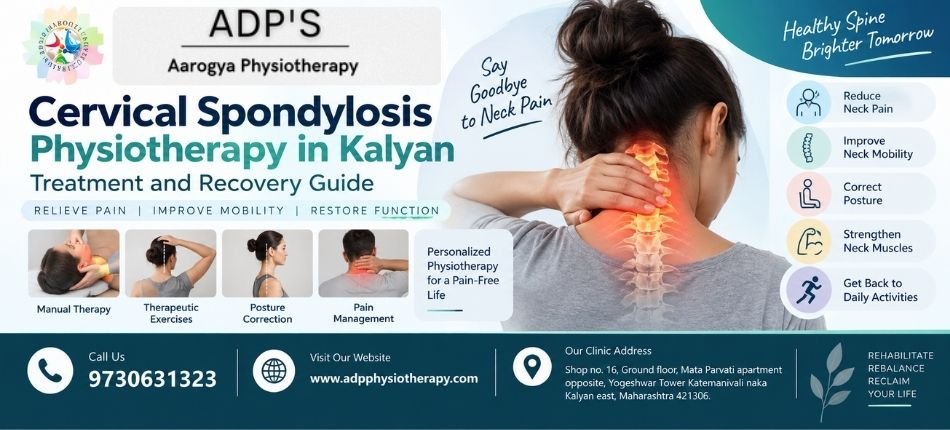
Cervical Spondylosis Physiotherapy in Kalyan : Treatment and Recovery Guide – ADP Physiotherapy Clinic
Introduction
Neck pain, stiffness, headaches, and discomfort spreading toward the shoulders or arms can make everyday activities difficult. One possible cause of these symptoms is cervical spondylosis, a condition involving age-related changes in the bones, discs, and joints of the neck.
Although these changes become increasingly common with age, symptoms and their severity can vary considerably. Poor posture, prolonged desk work, reduced physical activity, previous neck injuries, and repetitive strain may also contribute to neck discomfort.
Cervical Spondylosis Physiotherapy in Kalyan focuses on reducing symptoms, restoring comfortable neck movement, improving muscle strength, correcting contributing posture and helping patients return to everyday activities safely.
At ADP Physiotherapy Clinic, patients can receive personalized physiotherapy care focused on reducing neck pain, improving mobility, strengthening supporting muscles, and restoring comfortable daily movement.
What Is Cervical Spondylosis?
Cervical spondylosis refers to degenerative changes affecting the cervical spine—the seven vertebrae that form the neck.
Over time, the spinal discs can lose some of their height and hydration, while the joints and surrounding structures may also change. Some people may develop bone spurs as part of this process.
Importantly, age-related changes visible on an X-ray or MRI do not always cause symptoms. Treatment therefore needs to consider both examination findings and how the condition affects the individual.
What Causes Cervical Spondylosis?
Age-related wear and changes in the cervical spine are the primary cause. However, several factors may contribute to symptoms or increase mechanical stress on the neck.
These can include prolonged sitting, poor workstation ergonomics, repetitive neck movements, previous neck injury, reduced muscle strength, and maintaining the same neck position for extended periods.
Frequent use of smartphones or laptops with the head bent forward can also contribute to muscular strain and neck discomfort.
Common Symptoms of Cervical Spondylosis
Symptoms can differ from one patient to another. Common complaints include:
- Neck pain and stiffness
- Reduced neck movement
- Pain around the shoulder blades
- Headaches associated with neck discomfort
- Muscle tightness around the neck and shoulders
- Pain spreading into the shoulder or arm
- Tingling or numbness in the arm or hand when nerves are affected
- Weakness in certain cases
Symptoms may become more noticeable after prolonged sitting, computer work, driving or maintaining one position for a long time.
How Is Cervical Spondylosis Diagnosed?
Diagnosis begins with a detailed medical history and physical assessment. The healthcare professional evaluates neck movement, pain patterns, posture, muscle strength, reflexes, sensation and any symptoms involving the arms.
Imaging such as an X-ray or MRI may be recommended in selected cases, particularly when nerve involvement or another condition is suspected.
A physiotherapy assessment additionally examines how symptoms affect everyday activities and identifies movement, strength and ergonomic factors that can potentially be modified.
How Can Physiotherapy Help Cervical Spondylosis?
Physiotherapy aims to improve function rather than simply focusing on temporary pain reduction.
A personalised programme may include exercises, manual techniques, posture and ergonomic modifications, education and a home exercise programme.
The exact approach depends on the patient’s symptoms, examination findings, age, occupation, activity level and treatment goals.
1. Pain Management
During the initial stage, treatment may focus on controlling pain and allowing comfortable movement.
A physiotherapist may use appropriate physical therapy techniques alongside activity modification and gentle exercises. Patients are also educated about positions and activities that aggravate their symptoms.
The aim is to gradually restore normal activity rather than unnecessarily immobilising the neck for prolonged periods.
2. Manual Therapy
Manual therapy may be incorporated into treatment for suitable patients to address joint stiffness and muscular tightness.
Different mobilisation and soft-tissue techniques may be used depending on the assessment. These techniques are generally combined with therapeutic exercises rather than being used as the only treatment.
3. Neck Mobility Exercises
Stiffness can make turning or bending the neck uncomfortable. Controlled mobility exercises help maintain or gradually restore an appropriate range of motion.
Exercises should remain within a comfortable range and be progressed according to individual tolerance.
Sudden or forceful neck movements should not be performed without professional guidance.
4. Strengthening Exercises
The muscles supporting the neck, shoulders and upper back play an important role in maintaining posture and controlling movement.
A rehabilitation programme may include exercises targeting the deep neck flexors, shoulder-blade muscles and upper-back musculature.
Progressive strengthening can improve muscular endurance, which is particularly useful for people who spend long periods working at a desk.
5. Posture Correction
Posture is often addressed as part of Cervical Spondylosis Physiotherapy in Kalyan, particularly when symptoms are associated with prolonged sitting or computer use.
Instead of attempting to maintain one supposedly “perfect” posture all day, patients can benefit from comfortable workstation positioning and frequent changes of position.
A physiotherapist can identify specific habits that may be contributing to symptoms.
6. Ergonomic Advice for Desk Workers
Computer screens should generally be positioned so that prolonged downward or rotated neck positions are minimised.
Chair and desk arrangements should allow comfortable working positions. Regular movement breaks are equally important.
People who work for several hours at a computer may benefit from getting up, changing position and moving the neck and shoulders periodically.
7. Home Exercise Programme
Exercises performed between physiotherapy sessions are an important part of rehabilitation.
The programme may include mobility, strengthening and postural exercises selected according to the patient’s needs.
Consistency is usually more valuable than performing an excessive number of exercises at once. Exercises can be modified as symptoms and function improve.
Can Cervical Spondylosis Be Completely Cured?
Age-related structural changes in the spine generally cannot be reversed through physiotherapy.
However, structural changes do not necessarily determine how much pain or disability a person experiences. Many patients can improve their symptoms, movement, strength and ability to perform daily activities with appropriate conservative management.
The goal of physiotherapy is therefore to manage symptoms and improve function, rather than claim to reverse normal degenerative changes.
How Long Does Recovery Take?
There is no fixed recovery period for cervical spondylosis.
Some people with mild symptoms may improve within several weeks, while persistent symptoms or nerve involvement may require longer rehabilitation.
Recovery depends on symptom severity, general health, activity level, consistency with exercises and whether neurological symptoms are present.
What Should You Avoid With Cervical Spondylosis?
Patients should avoid activities that repeatedly or significantly aggravate their symptoms.
This may include prolonged static positions, sudden forceful neck movements, inappropriate heavy lifting or exercises performed with poor technique.
Complete avoidance of movement is generally not the goal. Instead, activity should be modified and gradually progressed according to professional advice.
When Should You Seek Medical Attention?
Most uncomplicated neck pain can be managed conservatively, but certain symptoms require prompt medical evaluation.
Seek medical advice if neck symptoms are accompanied by progressive arm or hand weakness, significant loss of sensation, problems with balance or walking, loss of hand coordination, bowel or bladder changes, severe pain following trauma, fever, or other concerning symptoms.
These symptoms may indicate neurological involvement or another condition requiring further investigation.
Preventing Recurrent Neck Pain
It may not be possible to prevent age-related cervical changes, but certain habits can help manage recurrent symptoms.
Regular physical activity, strengthening exercises, movement breaks during desk work and appropriate workstation ergonomics can all contribute to better neck function.
Continuing the prescribed home exercise programme after symptoms improve can also help maintain strength and mobility.
Cervical Spondylosis Physiotherapy in Kalyan at ADP Physiotherapy
At ADP Physiotherapy Clinic, treatment can begin with an assessment of symptoms, neck mobility, strength, posture, neurological signs and functional limitations.
A personalised rehabilitation programme may then combine appropriate pain-management strategies, therapeutic exercises, manual therapy, strengthening, posture modification and home exercises.
The objective of Cervical Spondylosis Physiotherapy in Kalyan is to help patients move more comfortably, improve functional ability and confidently return to daily activities.
Conclusion
Cervical spondylosis is common, particularly with increasing age, but symptoms do not have to prevent you from maintaining an active lifestyle.
Physiotherapy can play an important role in managing neck pain and stiffness, improving mobility and strength, and addressing factors that contribute to recurring symptoms.
If neck pain is persistent or interfering with work and everyday activities, a physiotherapy assessment can help determine an appropriate rehabilitation programme.
Cervical Spondylosis Physiotherapy in Kalyan Cervical Spondylosis Physiotherapy in Kalyan Cervical Spondylosis Physiotherapy in Kalyan Cervical Spondylosis Physiotherapy in Kalyan Cervical Spondylosis Physiotherapy in Kalyan Cervical Spondylosis Physiotherapy in Kalyan Cervical Spondylosis Physiotherapy in Kalyan Cervical Spondylosis Physiotherapy in Kalyan Cervical Spondylosis Physiotherapy in Kalyan