
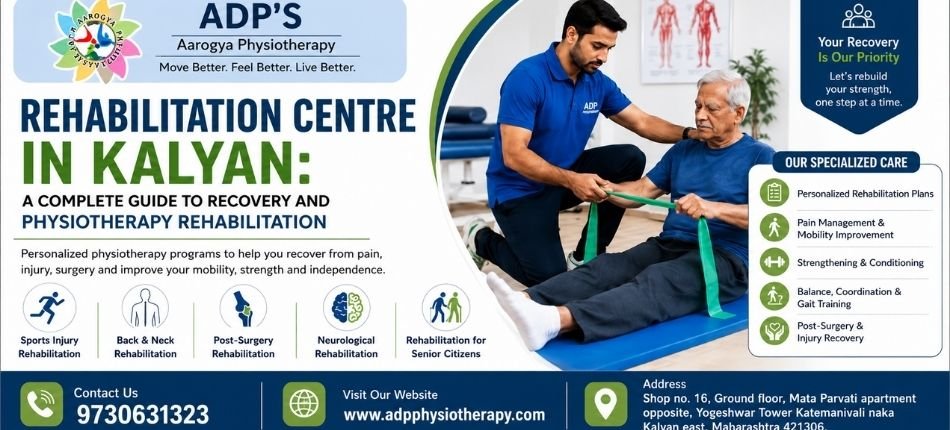
Rehabilitation Centre in Kalyan: A Complete Guide to Recovery and Physiotherapy Rehabilitation – ADP Physiotherapy
Recovery after an injury, surgery, prolonged illness, or mobility problem often requires more than rest. The body may need structured exercises, gradual strengthening, mobility training, pain management, and professional supervision to return to everyday activities safely.
A professional Rehabilitation Centre in Kalyan can provide an individualized rehabilitation program based on a patient’s condition, current abilities, recovery goals, and medical recommendations. Physiotherapy rehabilitation may help patients improve movement, strength, flexibility, balance, coordination, and functional independence.
At ADP Physiotherapy, rehabilitation focuses on helping patients progress step by step through an appropriate and structured recovery program.
What Is a Rehabilitation Centre?
A rehabilitation centre provides structured care to people recovering from injuries, surgery, neurological conditions, musculoskeletal problems, or other conditions that affect mobility and physical function.
Rehabilitation is not limited to relieving pain. Depending on the patient’s condition, the program may focus on restoring movement, rebuilding muscle strength, improving balance, increasing flexibility, and helping the patient return to everyday activities.
Every rehabilitation plan should be individualized because two patients with similar conditions may have different levels of pain, strength, mobility, and functional ability.
Why Is Rehabilitation Important?
After an injury, surgery, or prolonged period of inactivity, muscles can become weak and joints may become stiff. Patients may also lose confidence in certain movements because they are worried about pain or reinjury.
Structured rehabilitation can help patients gradually regain physical function while following appropriate precautions.
Depending on the condition, rehabilitation may help with:
- Improving joint mobility
- Rebuilding muscle strength
- Increasing flexibility
- Improving balance and coordination
- Supporting better walking patterns
- Managing pain and stiffness
- Improving posture
- Returning to daily activities
- Reducing physical limitations
- Supporting recovery after surgery
The exact benefits and recovery timeline vary between patients.
Who May Need Physiotherapy Rehabilitation?
People may seek rehabilitation for many different reasons.
Recovery After Orthopedic Surgery
Procedures involving the knee, hip, shoulder, spine, or other joints may require physiotherapy as part of postoperative recovery.
A rehabilitation program may focus on gradually restoring movement, strength, and functional ability according to the surgeon’s recommendations.
Sports Injuries
Sports injuries can affect muscles, ligaments, tendons, and joints.
Rehabilitation may help athletes and physically active individuals regain strength, mobility, coordination, and confidence before gradually returning to their activities.
Fractures
After a fracture has healed sufficiently and the treating doctor permits rehabilitation, physiotherapy may help address stiffness, muscle weakness, and reduced mobility caused by immobilization.
Back and Neck Problems
Back or neck discomfort can sometimes affect movement and everyday activities.
Depending on the underlying cause, rehabilitation may involve mobility exercises, strengthening, posture education, and activity modification.
Neurological Conditions
Certain neurological conditions can affect movement, balance, coordination, muscle control, and independence.
Physiotherapy rehabilitation may form part of a broader multidisciplinary management plan.
What Happens at a Rehabilitation Centre in Kalyan?
When you visit a Rehabilitation Centre in Kalyan, the rehabilitation process usually begins with a detailed assessment to understand your condition, symptoms, physical limitations, medical history, and recovery goals. The physiotherapist may evaluate joint range of motion, muscle strength, flexibility, balance, posture, walking pattern, pain levels, and ability to perform everyday activities. Based on these findings, an individualized rehabilitation program may be developed that can include mobility exercises, progressive strengthening, balance and coordination training, gait training, functional exercises, and appropriate pain-management techniques. Progress is monitored regularly so exercises can be modified as strength and mobility improve. Patients may also receive a home exercise program to support recovery between supervised sessions.
Individualized Rehabilitation Planning
One of the most important principles of rehabilitation is personalization.
For example, a young athlete recovering from a knee injury may require a different rehabilitation program from an older adult recovering after joint surgery.
Similarly, someone whose job involves lifting may have different functional goals from someone who works primarily at a desk.
The treatment plan should therefore be based on the patient’s current abilities and the activities they need to return to.
Pain Management During Rehabilitation
Pain can make movement difficult and may reduce confidence in exercise.
Depending on the diagnosis, physiotherapy may incorporate appropriate techniques to help manage pain and support movement.
However, rehabilitation should not focus exclusively on temporary pain relief. The longer-term objective is often to improve physical function and address factors contributing to movement limitations.
Range-of-Motion Exercises
Joint stiffness can develop after surgery, injury, immobilization, or prolonged inactivity.
Range-of-motion exercises are designed to gradually improve the movement available at a joint.
The type and intensity of exercises depend on the patient’s condition and medical restrictions.
Trying to force movement aggressively can be counterproductive, particularly during early recovery. Progress should follow professional guidance.
Strengthening Exercises
Muscles can lose strength quickly after injury or periods of reduced activity.
A structured rehabilitation program may introduce strengthening exercises gradually.
Early exercises may be relatively simple, while resistance and complexity can increase as the patient progresses.
Strengthening may help improve joint support, movement control, and ability to perform everyday tasks.
Balance and Coordination Training
Balance is essential for safe walking and many everyday activities.
Injury, surgery, neurological problems, ageing, or prolonged inactivity can affect balance and coordination.
Depending on the patient’s needs, rehabilitation may include exercises designed to challenge balance gradually in a controlled environment.
Gait and Walking Rehabilitation
Some patients develop altered walking patterns after injury, surgery, or prolonged pain.
They may place more weight on one leg, shorten their steps, or avoid certain movements.
Gait training aims to improve walking mechanics and gradually increase confidence and independence where appropriate.
Post-Surgical Rehabilitation
Post-surgical physiotherapy is commonly required following certain orthopedic procedures.
The rehabilitation plan should respect the surgeon’s precautions and expected healing timeline.
Treatment may progress through different phases.
Early Phase
The focus may include pain and swelling management, safe mobility, and gentle exercises permitted by the surgeon.
Intermediate Phase
As healing progresses, the program may gradually emphasize mobility, muscle activation, strength, and functional movement.
Advanced Phase
Later rehabilitation may focus on higher-level strength, balance, endurance, work-related activities, or sports-specific movements depending on the patient’s goals.
Sports Injury Rehabilitation
Returning to sport requires more than simply becoming pain-free.
An athlete may need adequate strength, mobility, balance, coordination, endurance, and confidence before returning to full activity.
A sports rehabilitation program may therefore progress from basic recovery exercises to more demanding movements that reflect the requirements of the sport.
Returning too early may increase the possibility of aggravating the injury.
Rehabilitation for Older Adults
Rehabilitation for older adults focuses on helping them maintain or improve mobility, strength, balance, confidence, and independence in everyday activities. Ageing, hospitalization, injury, surgery, arthritis, or prolonged inactivity can sometimes lead to muscle weakness, reduced endurance, joint stiffness, or difficulty with walking and balance. A physiotherapy rehabilitation program may include gentle strengthening exercises, flexibility and mobility training, balance exercises, walking practice, and functional activities such as getting up from a chair or climbing steps. The exercises should be adapted to the individual’s health, physical abilities, and medical conditions and progressed gradually. For older adults, the overall goal of rehabilitation is not simply exercise—it is to support safer movement and make everyday activities easier and more manageable.
How Long Does Rehabilitation Take?
There is no fixed rehabilitation duration.
Recovery may depend on:
- Type and severity of injury
- Surgical procedure
- Age
- General health
- Previous activity level
- Healing response
- Consistency with exercises
- Rehabilitation goals
Some conditions may improve over a relatively short period, while others require longer-term rehabilitation.
Progress should be evaluated based on functional improvement rather than comparing your recovery with someone else’s.
Importance of Home Exercises
Exercises performed at the rehabilitation centre are only one part of recovery.
When appropriate, patients may be given a home exercise program to continue between sessions.
Following these exercises correctly and consistently can help maintain progress.
However, patients should avoid adding exercises from online videos without discussing them with their physiotherapist, particularly after surgery or significant injury.
When Should You Consider Visiting a Rehabilitation Centre?
Professional rehabilitation may be useful if you are experiencing difficulty returning to normal movement after an injury, surgery, fracture, or prolonged period of inactivity.
Persistent weakness, stiffness, difficulty walking, poor balance, or reduced ability to perform daily activities may also warrant professional assessment.
Sudden or severe symptoms should receive appropriate medical evaluation before beginning an exercise program.
Choosing a Rehabilitation Centre in Kalyan
When choosing a rehabilitation facility, look for an approach that begins with assessment and provides an individualized treatment plan.
A good rehabilitation program should focus on measurable functional goals rather than relying only on passive treatment.
Patients should also understand:
- Their diagnosis
- Treatment goals
- Exercises being performed
- Expected progression
- Home exercise requirements
- Activities that should temporarily be avoided
Good communication between the patient and physiotherapist is an important part of rehabilitation.
Rehabilitation at ADP Physiotherapy
Patients searching for a Rehabilitation Centre in Kalyan can consult ADP Physiotherapy for assessment and structured physiotherapy rehabilitation.
Depending on the patient’s condition, rehabilitation may focus on improving mobility, strength, flexibility, balance, walking ability, and overall physical function.
The rehabilitation program is planned according to individual requirements, recovery stage, and functional goals.
Conclusion
Rehabilitation plays an important role in helping people regain physical function following injuries, surgeries, mobility problems, and other conditions affecting movement.
Rather than focusing only on temporary symptom relief, structured rehabilitation aims to progressively improve mobility, strength, balance, confidence, and independence.
If you are looking for a Rehabilitation Centre in Kalyan, professional physiotherapy assessment can help identify your current limitations and create an appropriate recovery plan.
With consistent rehabilitation, appropriate exercise progression, and professional supervision, patients can work towards returning to everyday activities safely and confidently.
Rehabilitation Centre in Kalyan Rehabilitation Centre in Kalyan Rehabilitation Centre in Kalyan Rehabilitation Centre in Kalyan Rehabilitation Centre in Kalyan Rehabilitation Centre in Kalyan Rehabilitation Centre in Kalyan Rehabilitation Centre in Kalyan Rehabilitation Centre in Kalyan Rehabilitation Centre in Kalyan Rehabilitation Centre in Kalyan Rehabilitation Centre in Kalyan
Best Physiotherapy Clinic in Ambernath | ADP Physiotherapy Clinic