
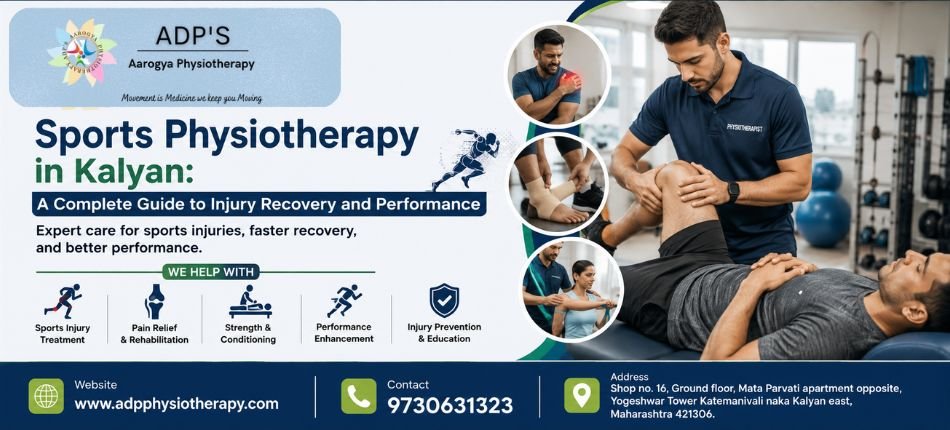
Sports Physiotherapy in Kalyan: A Complete Guide to Injury Recovery and Performance – ADP Physiotheraphy
Sports and physical activities are excellent for fitness, strength, and overall wellbeing, but they can also place considerable demands on muscles, joints, tendons, and ligaments. Whether you are a professional athlete, recreational runner, gym enthusiast, weekend football player, or someone who simply enjoys staying active, injuries can interrupt your routine and affect performance.
Proper rehabilitation after a sports injury involves more than simply waiting for pain to disappear. Rest may be necessary during certain stages of recovery, but restoring movement, strength, flexibility, balance, and confidence is equally important.
This is where Sports Physiotherapy in Kalyan can play an important role. Sports physiotherapy focuses on assessing sports-related injuries, supporting rehabilitation, restoring physical function, and helping individuals return to their activities safely.
What Is Sports Physiotherapy?
Sports physiotherapy is a specialized area of physiotherapy focused on injuries and physical problems associated with sports, exercise, and active lifestyles.
The objective is not limited to reducing pain. Depending on the injury, rehabilitation may also focus on improving mobility, rebuilding strength, restoring joint stability, correcting movement patterns, and gradually preparing the individual to return to their chosen activity.
A sports physiotherapy program should be individualized according to the type of injury, activity level, physical demands of the sport, and stage of recovery.
Who Can Benefit From Sports Physiotherapy?
Sports physiotherapy can benefit anyone who participates in sports, exercise, or regular physical activity—not only professional athletes. Runners, gym enthusiasts, cyclists, cricketers, football and badminton players, dancers, recreational athletes, and people returning to activity after an injury or surgery may all benefit from a structured rehabilitation program. It can also be helpful for individuals experiencing recurring pain, muscle strains, joint stiffness, weakness, or difficulty performing certain movements during exercise. Sports physiotherapy is tailored to the person’s injury, fitness level, activity demands, and recovery goals, helping them restore function and return to physical activity progressively and safely.
Common Sports Injuries Treated With Physiotherapy
Sports injuries can affect almost any part of the body. Some problems develop suddenly, while others gradually appear because of repetitive loading or overuse.
Common conditions for which people seek Sports Physiotherapy in Kalyan may include:
Ankle Sprains
An ankle sprain commonly occurs when the ankle twists beyond its normal range and the supporting ligaments are injured.
Physiotherapy may include mobility exercises, strengthening, balance training, and progressive activity depending on the severity of the injury.
Knee Injuries
Sports involving running, jumping, turning, and sudden direction changes can place significant demands on the knee.
Knee rehabilitation may focus on strength, mobility, balance, movement control, and gradual return to sport.
Muscle Strains
Muscle strains may affect the hamstrings, quadriceps, calf, groin, shoulder, or other muscle groups.
Rehabilitation is generally progressed according to the severity and location of the strain and the physical demands the individual needs to return to.
Shoulder Injuries
Cricket, badminton, swimming, weight training, and other overhead activities can place repeated demands on the shoulder.
Physiotherapy may focus on shoulder mobility, strength, control, and sport-specific movement.
Tennis Elbow
Despite its name, tennis elbow is not limited to tennis players. Repetitive gripping and wrist movements may contribute to symptoms around the outer elbow.
An appropriate rehabilitation program may involve activity modification and progressive exercises.
Tendon Problems
Repeated loading can contribute to tendon-related pain in areas such as the Achilles tendon, patellar tendon, or shoulder.
Exercise-based rehabilitation and gradual load management may form an important part of treatment.
Sports Injury? Don’t Just Rest—Recover the Right Way
When an injury occurs, the first instinct is often to stop activity completely until the pain disappears.
In some situations, temporary rest or activity modification is appropriate. However, prolonged inactivity without a rehabilitation plan may contribute to reduced strength, mobility, coordination, or confidence.
A structured rehabilitation program aims to progressively restore the abilities needed for everyday movement and sports participation.
The appropriate amount of activity depends on the injury and stage of healing, which is why professional assessment is useful.
How Does Sports Physiotherapy Help With Recovery?
Pain Management
Depending on the condition, physiotherapy may use appropriate movement, exercise, education, activity modification, and other techniques to help manage symptoms.
Pain reduction alone, however, does not necessarily mean that the injured tissue or physical capacity has completely recovered.
Restoring Mobility
Injuries can cause stiffness and restricted movement.
Appropriate mobility exercises can help restore the range of movement needed for normal activity and sport.
Rebuilding Strength
Pain and inactivity may lead to reduced strength.
Progressive strengthening exercises help prepare muscles and supporting structures for increasing physical demands.
Improving Balance and Stability
Balance and neuromuscular control can be particularly important after lower-limb injuries such as ankle or knee injuries.
Specific exercises may be included to improve control and stability.
Returning to Sport
The final stage of rehabilitation may involve progressively introducing movements related to the patient’s sport, such as running, jumping, changing direction, throwing, or other relevant activities.
Why Is a Proper Sports Injury Assessment Important?
A proper sports injury assessment is important because pain alone does not always reveal the exact nature or cause of an injury. Two people experiencing pain in the same area may have different underlying problems and therefore require different rehabilitation approaches. During an assessment, a physiotherapist may evaluate how the injury occurred, the location and severity of symptoms, joint mobility, muscle strength, flexibility, balance, movement patterns, previous injuries, and the specific demands of the person’s sport. Identifying these factors helps create an individualized treatment and rehabilitation plan rather than relying only on temporary pain relief or general exercises.
The Importance of Exercise in Sports Rehabilitation
Exercise is an important part of sports rehabilitation because recovery involves restoring the physical abilities required for both everyday movement and sports performance. Depending on the injury and stage of healing, a rehabilitation program may include mobility, flexibility, strengthening, balance, coordination, endurance, and sport-specific exercises. Exercises are usually progressed gradually as strength and function improve, helping the injured area adapt to increasing physical demands. A structured exercise program can also address weaknesses or movement limitations that may contribute to recurring problems. The type, intensity, and progression of exercises should be individualized by a qualified physiotherapist according to the injury and the patient’s recovery goals.
Can Sports Physiotherapy Help Prevent Re-Injury?
Previous injury can sometimes increase the risk of future problems, particularly when strength, movement, or physical capacity has not been fully restored.
Physiotherapy may help identify and address modifiable factors such as weakness, poor balance, reduced mobility, or inadequate preparation for the demands of a particular sport.
However, no rehabilitation program can guarantee that an injury will never occur again.
The objective is to help the individual return to activity with appropriate physical preparation and strategies for managing training loads.
Why Returning to Sports Too Early Can Be a Problem
Feeling better is encouraging, but absence of pain does not always mean complete recovery.
If an athlete returns to full activity before adequate strength, mobility, balance, and sport-specific capacity have been restored, the body may not be prepared for those demands.
Return-to-sport decisions should therefore consider function as well as symptoms.
Sports Physiotherapy in Kalyan for Active Individuals
Whether you participate in competitive sports or exercise recreationally, an injury can affect both physical ability and confidence.
Seeking Sports Physiotherapy in Kalyan can help you understand the nature of your problem and follow a structured rehabilitation program based on your individual requirements.
The goal is not simply to return to activity quickly, but to return appropriately and progressively.
Conclusion
A sports injury does not always require complete inactivity until symptoms disappear. Appropriate rehabilitation can help restore movement, strength, stability, and physical capacity while preparing the body for a gradual return to activity.
Sports Physiotherapy in Kalyan can support athletes, fitness enthusiasts, and active individuals through different stages of injury rehabilitation with an individualized approach.
Sports Physiotherapy in Kalyan Sports Physiotherapy in Kalyan Sports Physiotherapy in Kalyan Sports Physiotherapy in Kalyan Sports Physiotherapy in Kalyan Sports Physiotherapy in Kalyan Sports Physiotherapy in Kalyan Sports Physiotherapy in Kalyan